
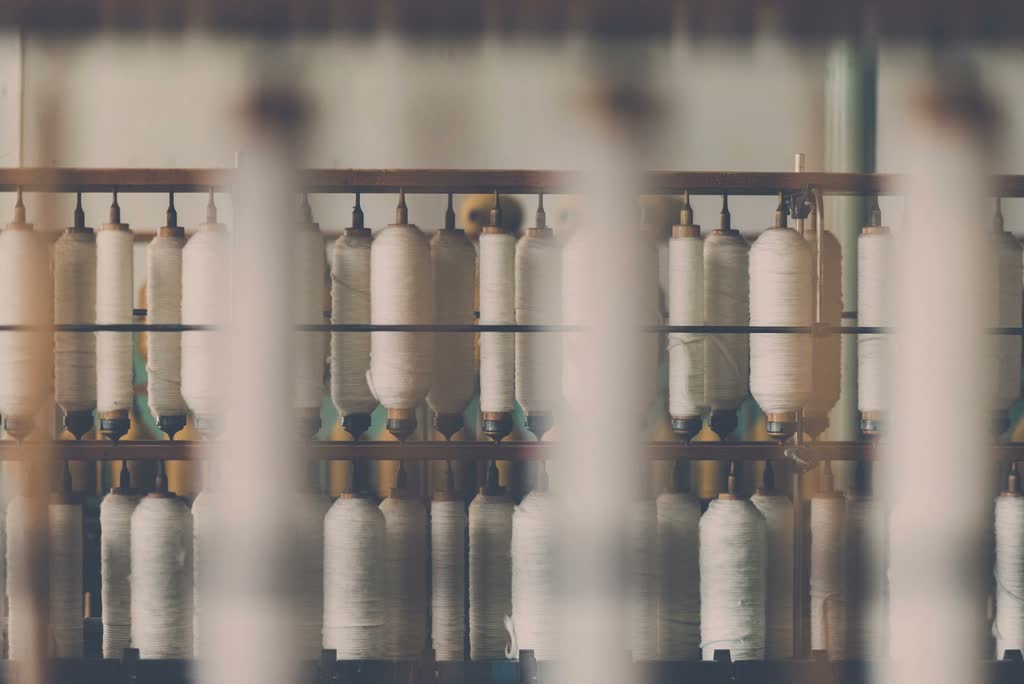
Stage one: the fiber is born
It starts as polyethylene pellets: the resin grade (this is where fiber quality is decided) melted and extruded through dies that shape the blade’s cross-section. Those die profiles are the "blade shapes" on spec sheets: C, W, diamond, and mono profiles, each a different bargain between softness, resilience, and light reflection. The extruded ribbons are drawn, annealed for strength, spun with texturized thatch yarns, and wound. At this point the lawn is thread on a spool.
Stage two: tufting and the backing sandwich
Tufting machines, industrial descendants of carpet looms, stitch the yarn through a woven primary backing at the machine gauge and stitch rate the spec sheet reports. Density is set here: 12,000 stitches per square meter versus 21,000 is the difference between daylight through the backing and a surface you can’t part with your fingers. Then the sandwich closes: a coating (two polyurethane coats on most of our catalog, a fully permeable FlowThru backing where drainage leads) locks every tuft, and drainage is punched or engineered through.
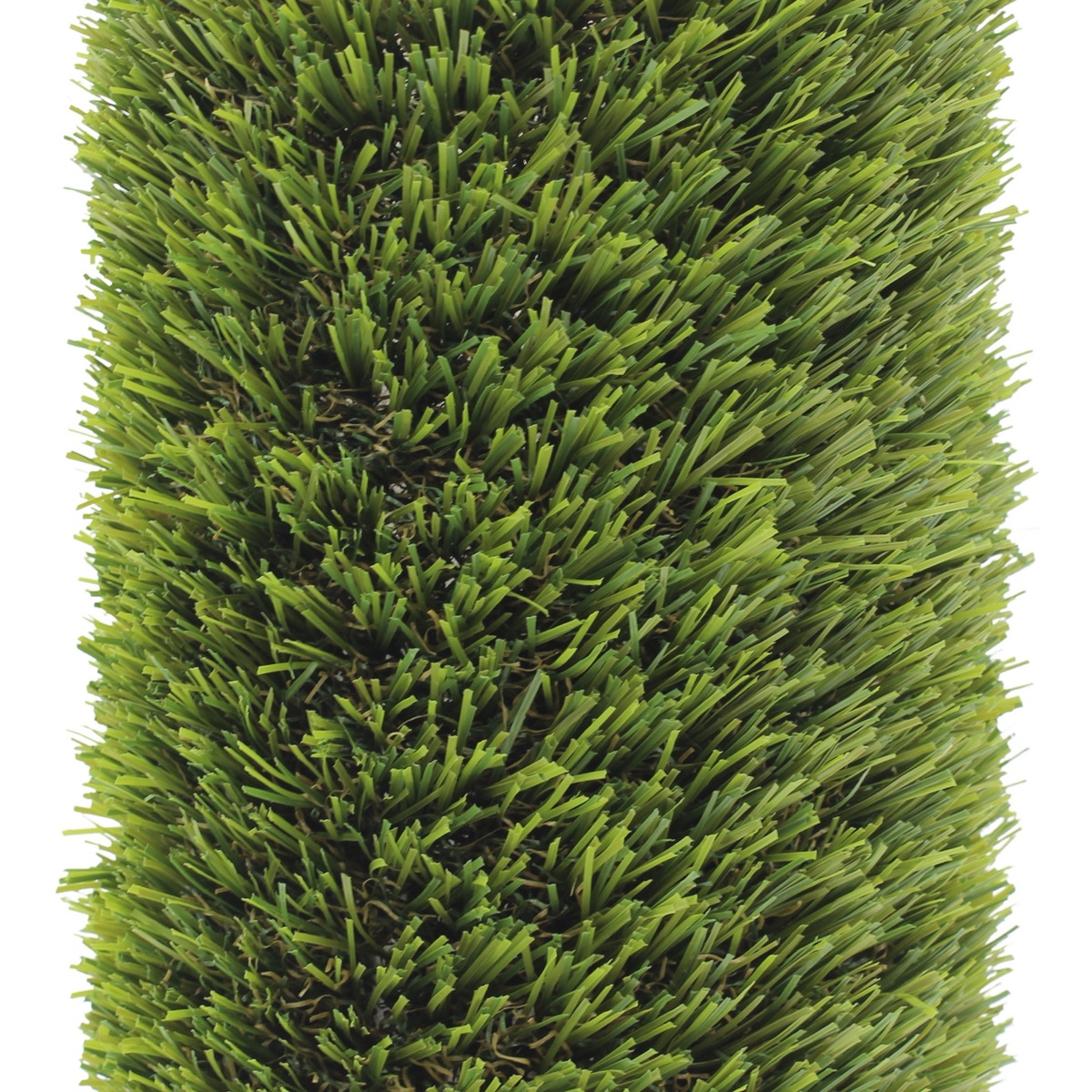
Where grades actually diverge
Every factory follows roughly this process; quality diverges at the inputs and checkpoints: resin grade, UV stabilizer package, tuft-lock strength testing, and dye-lot color control. That’s why we’d rather show spec tables than factory-tour romance: tuft bind, UV scores, and density numbers are the receipts of a process done right.