
From Pellet to Lawn
How our turf is actually made.
Your lawn started as a bag of pellets. The factory journey explains almost every quality difference you’ll ever pay for, so here it is, stage by stage, with the question you should ask at each one.
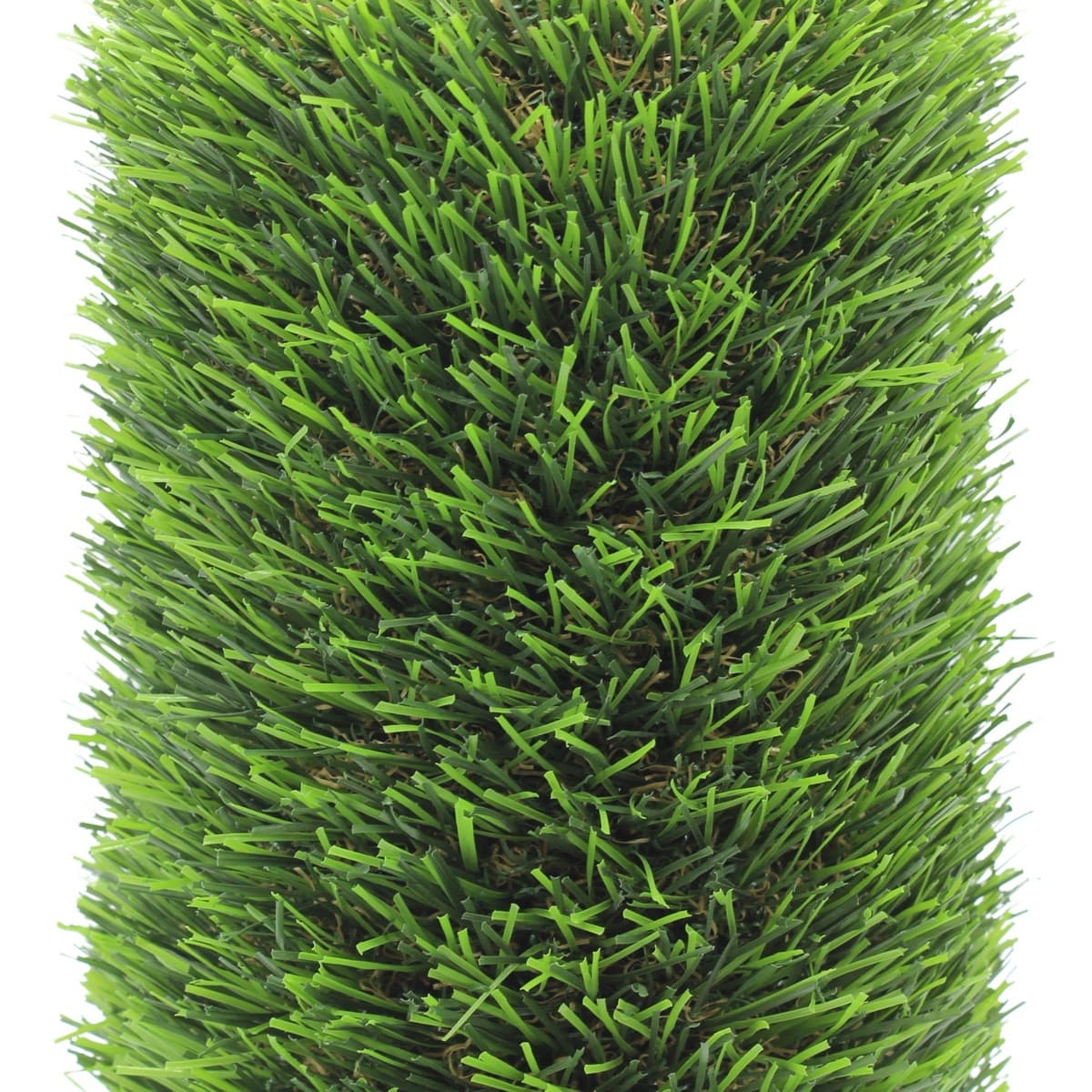 Evergreen 87, fresh off the line
The Factory Journey
Six stages, six questions.
Manufacturing literacy is buying literacy: every number on a spec sheet was decided at one of these stages. Learn where, and no salesperson can hand-wave you again.
Stage 01
Polymer pellets: the raw material
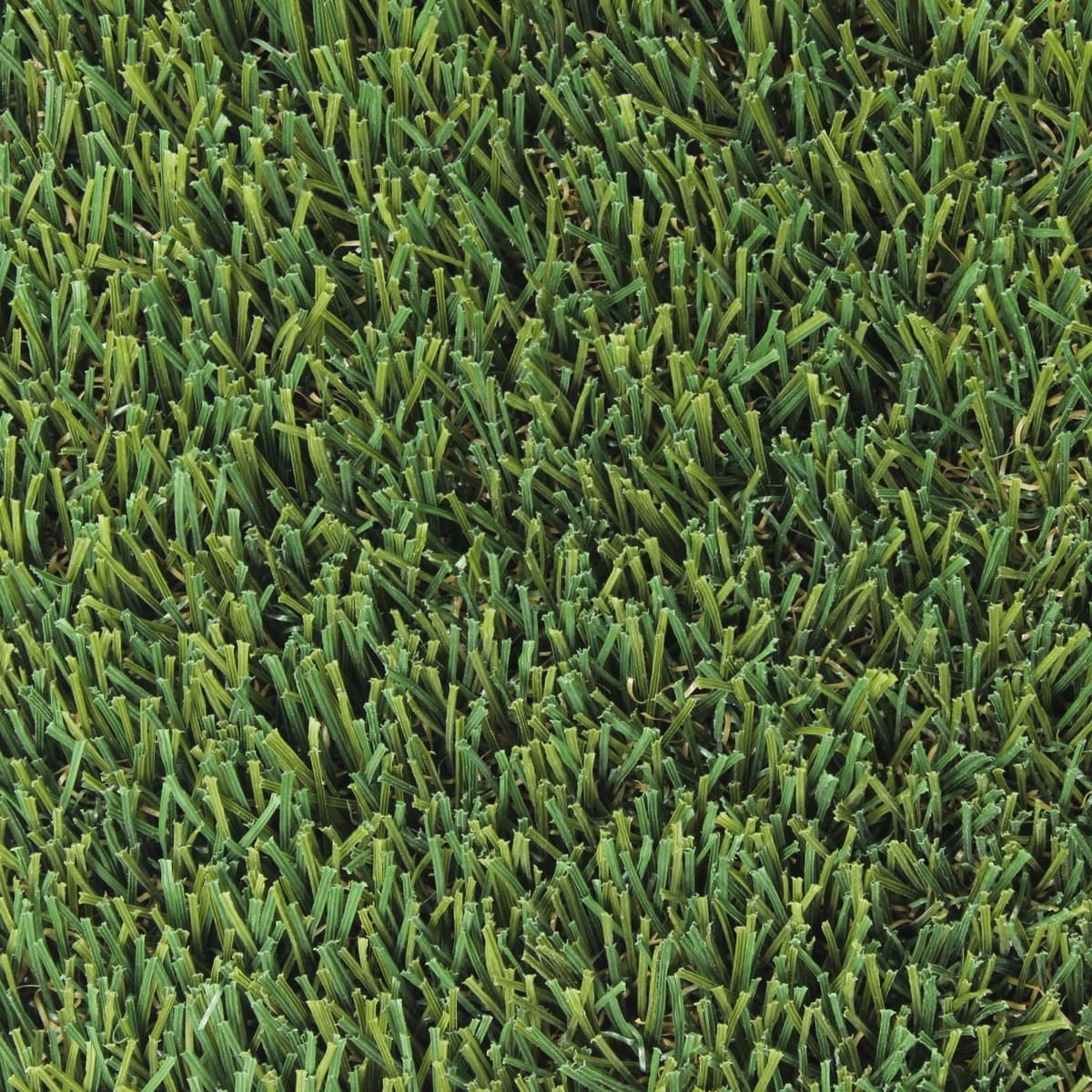 The fiber those pellets become
Every lawn starts as a bag of polyethylene pellets, and the resin grade chosen here sets a ceiling on everything downstream. This is where UV stabilization enters: the additive package blended into the resin decides how the fiber holds color and strength through years of sun and traffic. Cheap turf starts with cheap resin, and no later step can undo that.
What to ask: What resin grade and UV stabilization package is the yarn built on? Every EGD spec sheet publishes the fiber construction and denier; the details live on the technology page. Fiber technology details →
Stage 02
Yarn extrusion: the fiber is born
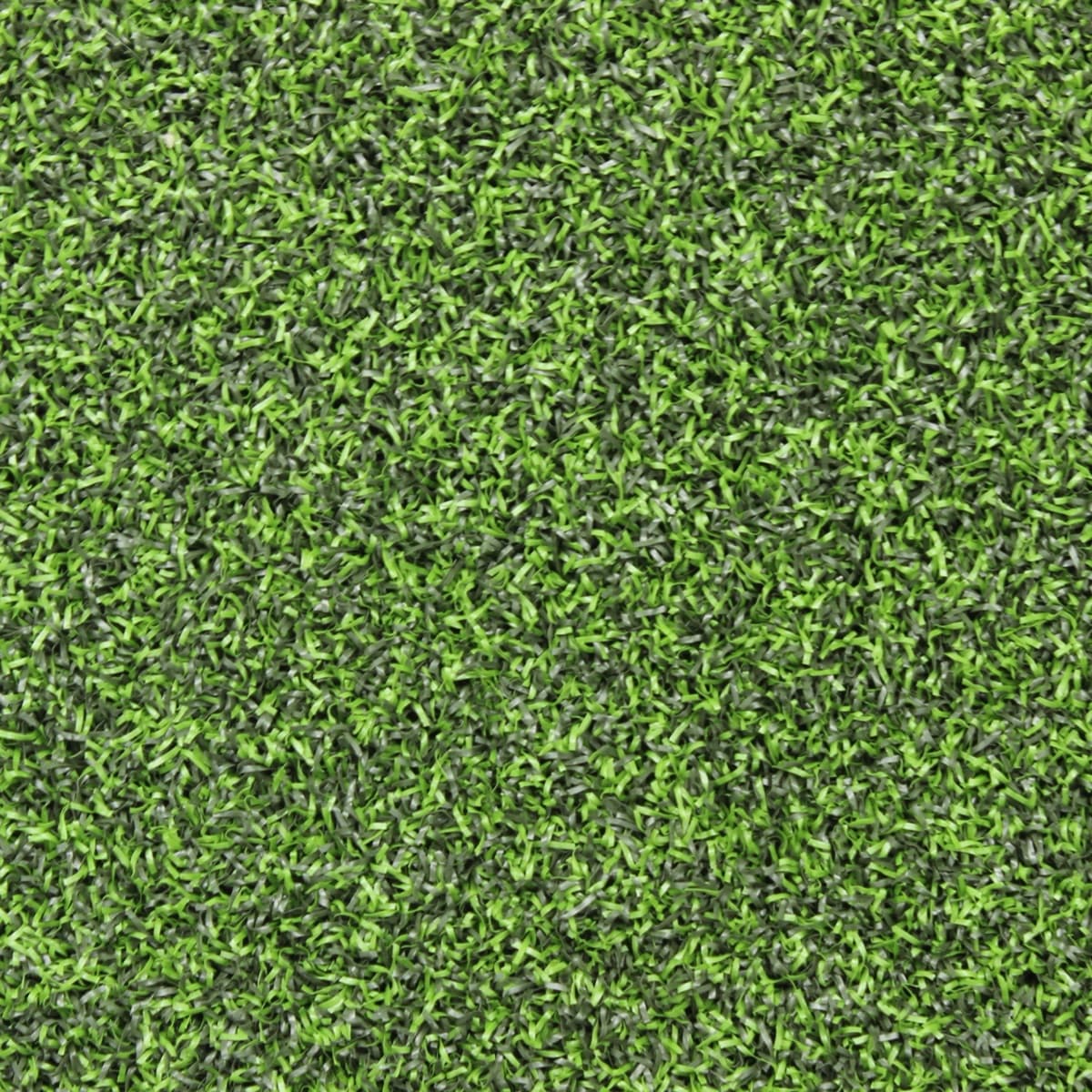 Blade profiles, straight from the dies
The melted resin is forced through dies that shape each blade’s cross-section. Those die profiles are the “blade shapes” on spec sheets (C, W, diamond, mono), each a different bargain between softness, resilience, and light reflection. Monofilament yarn extrudes each blade as its own strand: the natural look. Slit-film starts as a wide ribbon sliced into blades: the workhorse for heavy traffic. The strands are drawn and annealed for strength, spun together with texturized thatch yarns, and wound. At this point the lawn is thread on a spool.
What to ask: Monofilament, slit-film, or a blend, and which blade shape? There is no single right answer, only a right answer for your project’s traffic and look.
Stage 03
Tufting: density is decided here
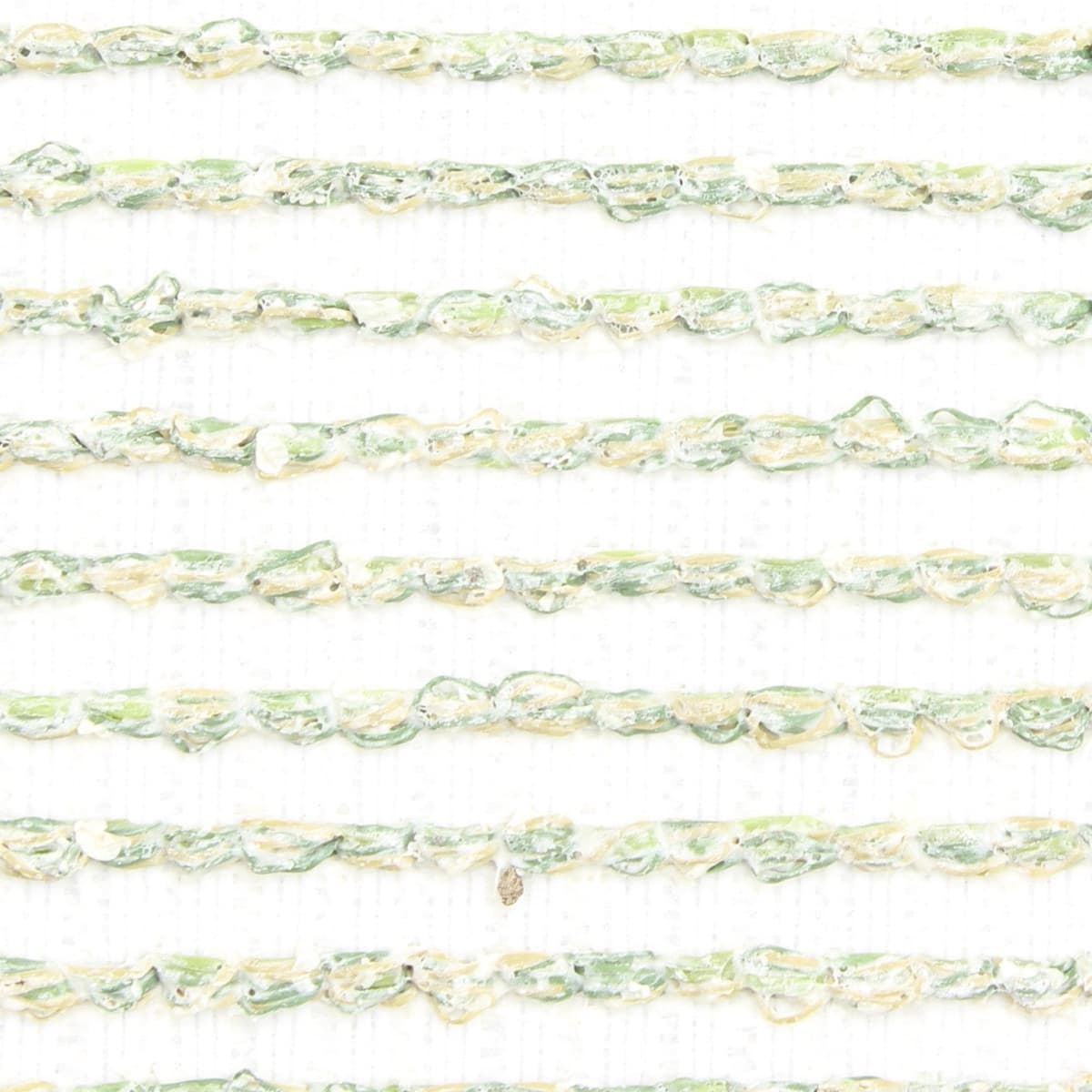 Stitch rows: tufting, made visible
Tufting machines, industrial descendants of carpet looms, stitch the yarn through a woven primary backing. The machine gauge and stitch rate set the numbers a spec sheet reports as stitch density and face weight. The difference between roughly 12,000 and 21,000 stitches per square meter is the difference between daylight through the backing and a surface you can’t part with your fingers.
What to ask: What are the stitch density and face weight, in numbers rather than adjectives? “Lush” is marketing; ounces per square yard is a measurement.
Stage 04
Coating: the backing sandwich closes
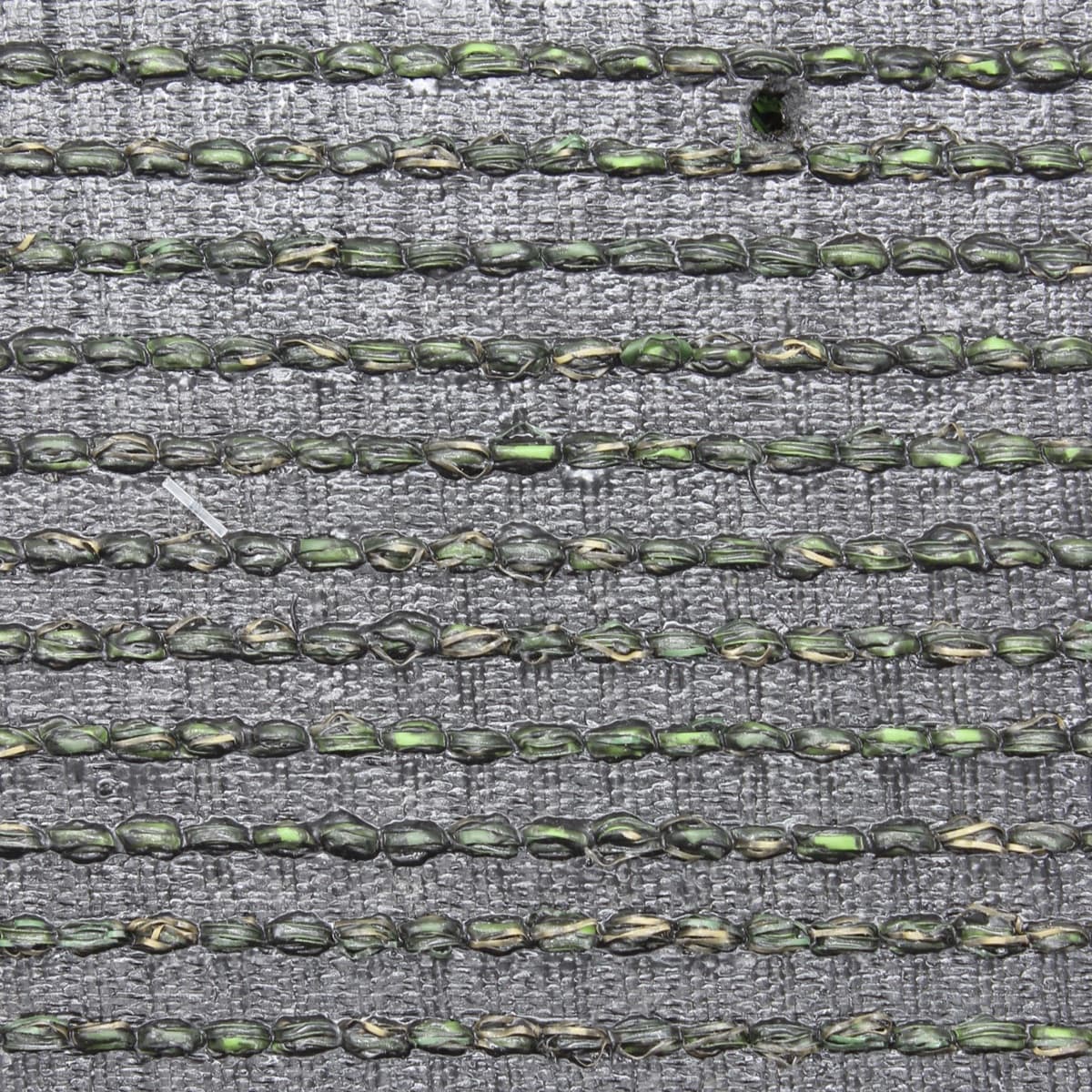 The coating that locks every tuft
A secondary coating (polyurethane on most of our catalog) locks every tuft into the backing. This is what tuft-bind strength measures: how many pounds of force it takes to rip a blade out. Then drainage is punched or engineered through the backing so the finished surface sheds rain and rinse water instead of ponding it.
What to ask: What is the backing material, the tuft-bind rating, and the drainage rate in inches per hour? All three are printed on every EGD product page. See published specs →
Stage 05
Quality control: where grades diverge
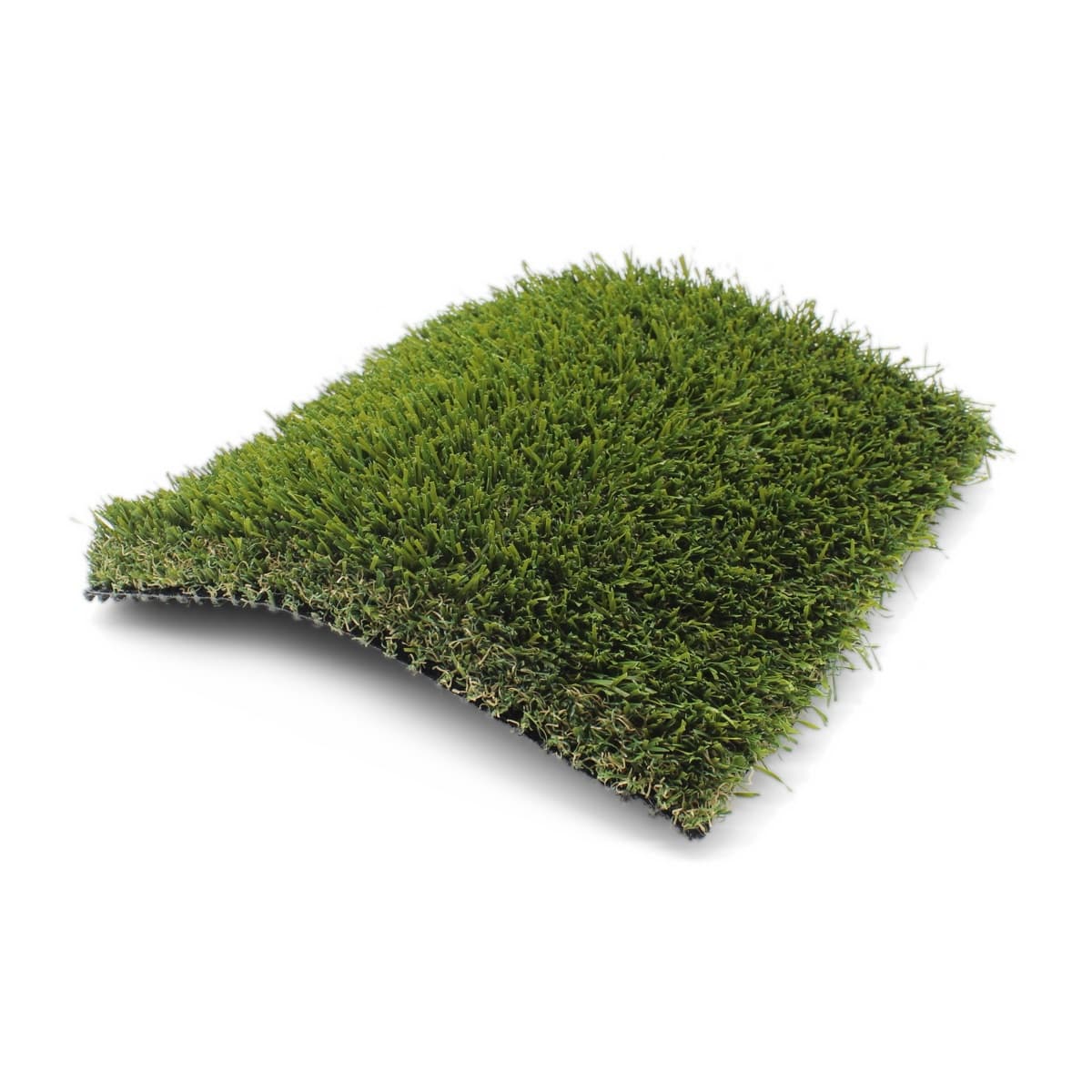 One sample, every spec visible
Every factory follows roughly the same process; quality diverges at the inputs and checkpoints. The ones that matter: UV weathering tests (does the green survive years of sun?), tuft-bind pull tests (do blades stay put?), and dye-lot color control (will roll two match roll one?). A mill that runs these checks prints the results. One that doesn’t, won’t.
What to ask: Can you show the UV score and tuft-bind number for this exact product? Absence of data is a data point; testing is cheap when the results are good. Spec-sheet guide →
Stage 06
Cut, roll & ship
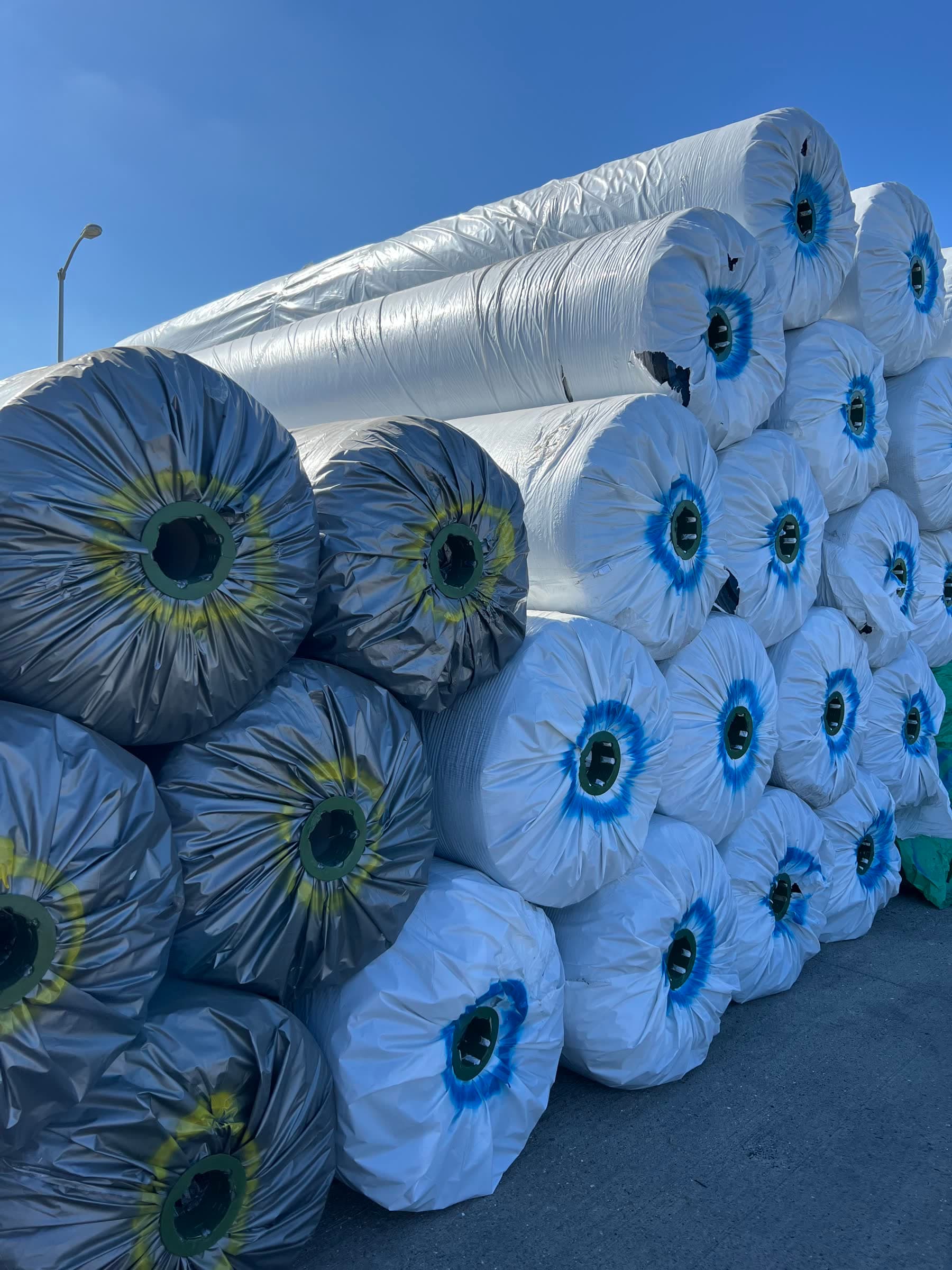 Cut, wrapped, and staged in our yard
The finished turf is inspected, cut, and wound onto 15-foot-wide rolls, the width every project math starts from. From there it moves to distributors like us: our warehouses cut rolls to your lengths, wrap and palletize them, and send them across town or across the country.
What to ask: How is the roll handled between the mill and your yard? Storage, cutting, and freight are where good turf gets damaged, and here’s how our delivery process protects it. How delivery works →
The honest part: we vet factories, we don’t romance them.
We’re a supplier, not a mill. Turf yarn is made in specialized extrusion and tufting factories, the same way it is for every brand you’ll ever compare us to. Every factory follows roughly the process above; quality diverges at the inputs and checkpoints: resin grade, UV stabilizer package, tuft-lock strength testing, and dye-lot color control. That’s why we’d rather show spec tables than factory-tour romance: tuft bind, UV scores, and density numbers are the receipts of a process done right, and we publish them for every product on our product pages.
Want to go deeper? The fiber technology page covers blade geometry and backing systems, the spec-sheet guide turns these six questions into a full reading checklist, and the original write-up lives on the blog: How Artificial Turf Is Made: From Pellet to Lawn.
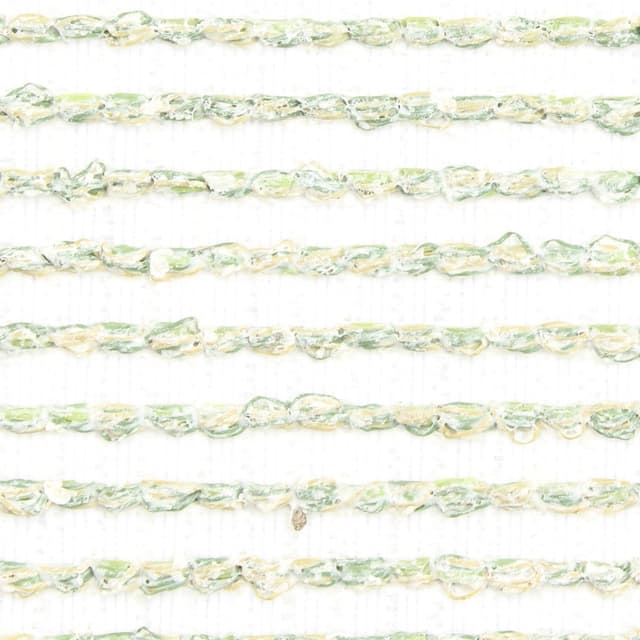
Flip the sample over. That’s the receipt.
The underside shows the whole story: stitch rows, coating, and drainage. Every free sample we ship lets you inspect the backing with your own hands before a single roll is cut.
FAQ
Manufacturing questions, straight answers.
Does Evergreen Grass Depot manufacture its own turf?
No, and no honest U.S. turf supplier hand-builds yarn in the back room. Turf is produced in specialized extrusion and tufting mills, and every factory follows roughly the same process; quality diverges at the inputs and checkpoints. Our job is vetting: we specify the resin, fiber construction, and backing our lines are built on, then verify UV scores and density on every production run, then print those numbers on every product page.
What is the difference between monofilament and slit-film yarn?
Monofilament extrudes each blade as its own strand: the most natural look and feel, the choice for front lawns and showcase spaces. Slit-film starts as a wide extruded ribbon sliced into blades, a tougher, more economical construction that shrugs off heavy traffic. Many products blend both: monofilament face fibers for looks over a slit-film or texturized thatch layer for body.
Which spec numbers actually prove manufacturing quality?
Four earn their place: tuft-bind strength (coating quality: blades stay anchored), UV weathering score (stabilizer package: the green survives sun), face weight with stitch density (tufting quality: real material, not haircut tricks), and drainage rate (backing engineering). A supplier who publishes all four per product has nothing to hide; a listing with none of them is telling you something too.
What does denier mean on a spec sheet?
Denier measures the weight of the fiber itself: heavier yarn takes longer to crease and mat under traffic. Our face yarns run 9,000 to 12,600 denier depending on the product, and the exact figure is printed on every spec sheet so you can compare builds directly.
Hold the end of the process in your hands.
Specs tell you how it was made; a sample tells you if you’ll love it. Swatches are free and ship anywhere in the U.S.