
Infill Guide
The part of the lawn you never see.
Infill is the difference between turf that performs for decades and turf that fails in two summers. Here is what it does and how to get it right.
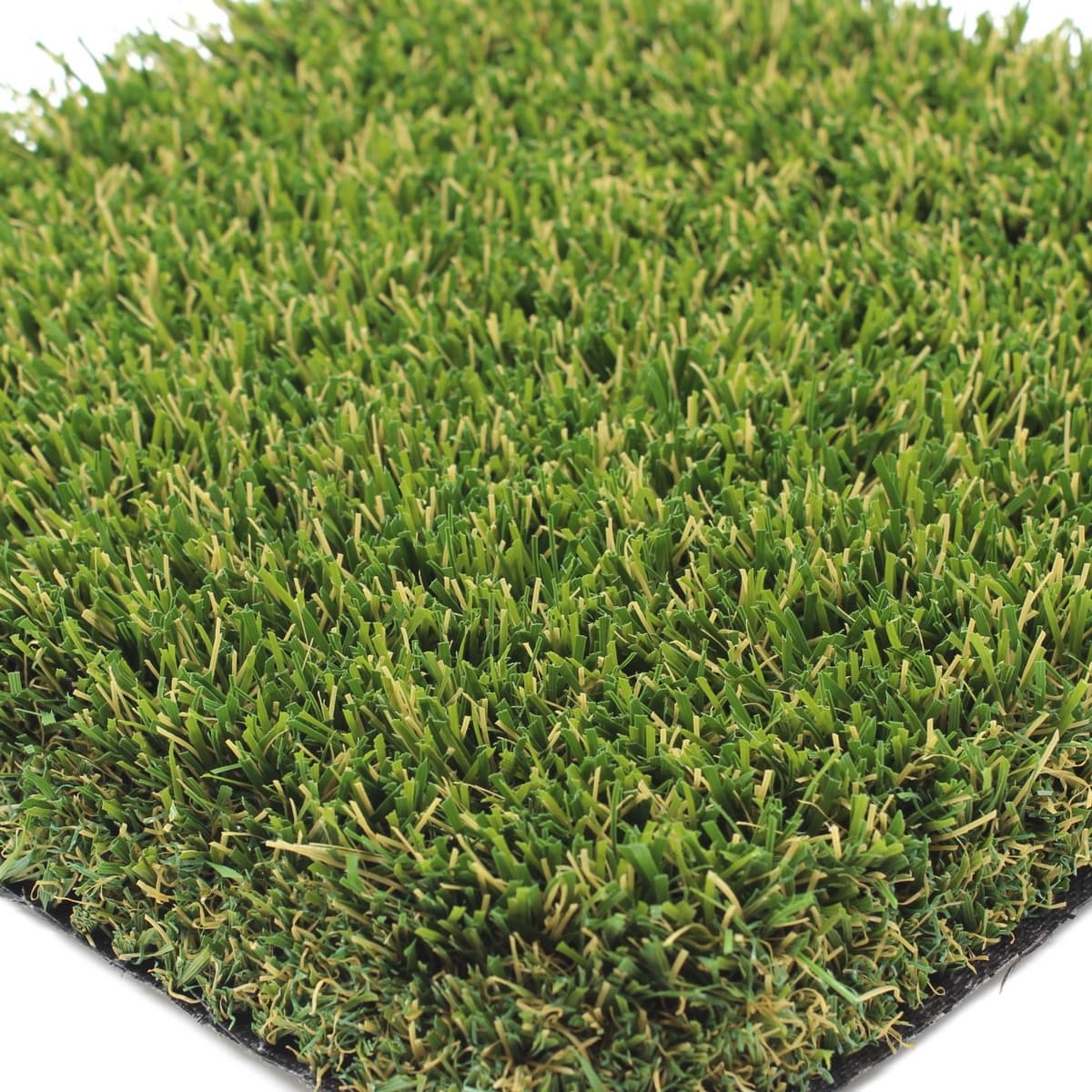 Down where the infill lives
What infill actually does.
Infill is the granular material, most commonly specialized sand, brushed down into the turf pile after installation. It earns its keep four ways:
- Ballast. Weight that holds the turf flat and dimensionally stable through temperature swings, so seams stay tight and edges stay down.
- Blade support. Infill props each blade upright at its root, the single biggest factor in whether high-traffic turf recovers or mats.
- Cushion. A properly infilled lawn has the springy give people notice barefoot; playgrounds and pet areas tune this deliberately.
- Drainage & heat behavior. The right infill keeps water moving through to the backing and moderates how the surface handles sun.
How much you need, by product.
Every EGD product page lists its infill spec. The short version by line:
- Evergreen lawns: 1–2 lbs/sqft (plusher models toward 1.5–2).
- Legacy: 1–2.5 lbs/sqft; the tall-pile Legacy 80 wants the most support at 2–2.5.
- EverPlay: 0.5–2 lbs/sqft depending on model and use intensity.
- EverPutt 81: 2–3 lbs/sqft, since infill quantity and rolling are literally how green speed is tuned.
Multiply your square footage by the spec and you have your order weight, and we supply infill alongside your turf so it arrives as one delivery.
Choosing the type.
Standard silica sand handles most lawns beautifully. Rounded-grain sands flow deeper into dense piles and are gentler on fibers in high-traffic areas. Pet projects often step up to infills designed for odor control, and playgrounds sometimes blend in resilient granules for extra cushioning. The right answer depends on your product, climate, and use. Tell us the project when you order and we spec the type and quantity with your quote, no guesswork required.
The mistakes to avoid.
- Skipping infill to save money: the turf mats early, seams stress, and the savings vanish into a shortened lifespan.
- Under-filling dense products: tall, heavy piles need their spec quantity to stand up properly.
- Spreading before brushing: blades must be power-broomed upright first, then infilled in passes (step 6 of our installation process).
Plan it tonight: free tools, instant answers.
Measure your yard on satellite imagery, design your space in 3D with any of our turf lines, or just talk to a real person.