
Turf Maintenance
Own the lawn. Keep it owned.
We’re a turf supplier, not a cleaning crew, so here’s the maintenance truth with nothing to sell you but the supplies: the real calendar, the pet-odor protocol, and when a job genuinely needs a pro.
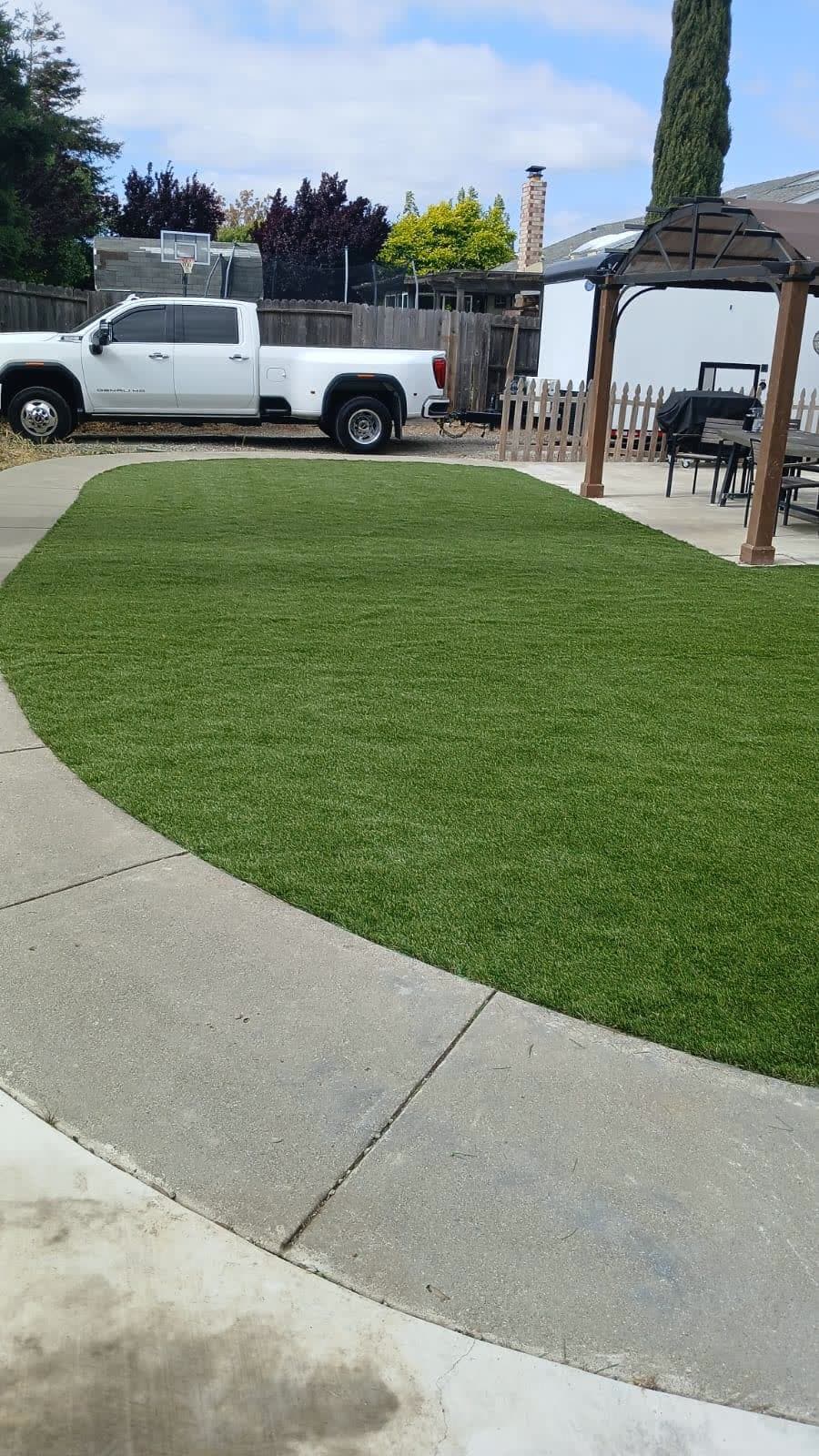 Kept lawns look like this on zero effort
Where we honestly fit in.
Plenty of companies would like to sell you a turf maintenance subscription. We won’t: we don’t run cleaning crews. What we do is sell the turf, the supplies that keep it right, and the know-how, and refer the jobs that need hands to our installer network. That means everything on this page is advice from the people who answer the phone when maintenance goes wrong, not a pitch for a service plan. Most of what a turf lawn needs, you can do with a hose and a broom. The rest, we’ll point you to honestly.
The Calendar
The honest maintenance calendar.
Fifteen minutes a month buys twenty-five years. Here’s where those minutes go.
Weekly
The pet-area pass
Pet zones: let solids dry, pick up, hose the urine spots (daily in hot months for small runs). Everywhere else, a weekly-ish glance and a leaf-blower pass on debris is plenty.
Monthly
Brush the traffic lanes
Cross-brush high-traffic paths against the grain with a stiff synthetic-bristle broom to keep blades standing, and clear any debris the wind collected. Fifteen minutes, tops.
Seasonal
The walk-around
Deep rinse the whole lawn, check infill depth in busy zones and top up where it has thinned, and walk the edges and seams. Spring after winter and fall before it are the natural checkpoints.
Yearly
The annual groom
One power-broom grooming stands the whole lawn back up and resettles infill, and a drainage check (does a hose-down clear in minutes like it used to?) catches problems while they are small.
The full routine (seasons, stains, snow, and the never-do list) lives in the care & maintenance guide.
The pet-odor protocol.
The number-one maintenance question we get, so here it is straight: odor problems are drainage problems. Urine that drains through and gets rinsed away has nowhere to sit and turn, which is why the routine matters more than any miracle product.
- Rinse on a schedule. Hose urine spots a couple of times a week, daily in hot months for small runs. Solids: let dry, pick up, done.
- Monthly refresh.Rinse the whole pet area with water and mild detergent. If any odor persists, an enzyme cleaner (any pet store carries one) breaks down what plain water leaves behind. Skip bleach and caustic cleaners; they’re a warranty exclusion anyway.
- Keep odor-control infill topped up. Infill in pet zones works hardest and thins first. Check depth seasonally and top up with the odor-control infill your product was specced with; the infill guide covers what each type does and why potty areas want their own.
Starting a pet project from scratch? Product choice does half this work for you: the pet turf guide covers the fast-draining backings that make the whole routine a two-minute job.
Supplies you’ll actually use.
The maintenance kit is short, and we’ll tell you where to get each piece even when it isn’t from us:
- Turf rake or power broom: a stiff synthetic-bristle broom handles the monthly pass; rent a power broom for the annual groom (any rental yard has one), or buy one if you’re maintaining serious square footage. Metal rakes never; they tear fiber.
- Enzyme cleaner: any pet store, any brand that lists enzymes. Nothing turf-specific to get wrong.
- Infill top-ups & seam repair supplies: these are worth getting with your order: the right infill type and quantity is a product spec, not a guess (it’s listed on every product page), and seam tape and adhesive matched to your turf beat generic guesses. Ask us and it rides the same freight as your rolls.
Setting up for an install rather than upkeep? The tool checklist sorts the full list into rent, buy, and skip.
Know When to Fold
When to call a pro.
Four jobs where the honest advice is: don’t DIY it. Our installer network handles all of them, and referrals are free.
Recovery
Matted pile that brushing won’t fix
When high-traffic lanes stay flat after a real cross-brushing, it takes power grooming and usually an infill correction. A pro with the right broom sorts it in a visit.
Repair
Seams & edges coming up
A lifted seam or loose edge only grows. Re-seaming and re-securing is precise, glue-and-tension work, exactly what an installer does all day.
Drainage
Water that stopped draining
Pooling that did not used to happen points below the turf: compacted fines or a base problem. Diagnosing it means opening a section up, and that is not a DIY afternoon.
Infill
Full infill replacement
Years of pet duty can call for extracting the old infill and re-dressing the lawn fresh. Doable by hand; dramatically faster with a crew and a hopper.
Maintenance is the warranty’s best friend.
Read any turf warranty closely (we decoded ours in public) and a pattern shows up: the common exclusions are mostly maintenance stories. Chemical damage from bleach and caustic cleaners. Neglect. Non-standard infill. Unauthorized repairs. Every one of them is avoided by exactly the routine on this page: mild cleaners and enzymes instead of harsh chemistry, infill kept to spec, problems reported within 7 days instead of patched quietly. The fifteen minutes a month doesn’t just keep the lawn looking right; it keeps sixteen years of coverage doing what you paid for.
FAQ
Maintenance questions, straight answers.
How often does artificial grass actually need maintenance?
Less than most sites imply, more than "never." The honest cadence: a quick debris pass weekly-ish, a rinse and cross-brush of high-traffic lanes monthly-ish, a seasonal check of infill and edges, and one thorough power-broom grooming a year. Pet areas add a rinse routine on top. Most months it is fifteen minutes, not a Saturday.
Will my turf smell if I have dogs?
Not if drainage and routine are right. Odor problems are drainage problems: urine that drains straight through and gets rinsed a couple of times a week has nowhere to sit and turn. Fast-draining backings, a hose routine, an enzyme cleaner for anything that persists, and odor-control infill kept topped up handle it. Turf fiber is polyethylene; it does not absorb liquids.
What does annual turf upkeep honestly cost?
Illustrative, not a quote: doing it yourself, supplies run roughly $50–$150 a year: enzyme cleaner, utility-knife blades, an occasional bag of infill, and a power-broom rental every year or two. Hiring a maintenance service for periodic grooming typically runs a few hundred dollars a year, commonly $200–$500 depending on lawn size and market. Either way it is a fraction of mowing, watering, and fertilizing a live lawn.
Can I pressure-wash artificial grass?
Carefully, yes. Use a wide fan tip, low pressure, keep the wand a couple of feet off the surface, and spray at an angle rather than straight down. Know the trade-off: pressure-washing displaces infill, so plan to brush the pile back up and top up infill afterward. For routine cleaning, a garden hose does the job with none of the downside.
Buy it once. Keep it forever.
Turf, infill, seam supplies, and straight answers from one supplier, plus free samples to start the project right. Call or text and ask us anything on this page.