
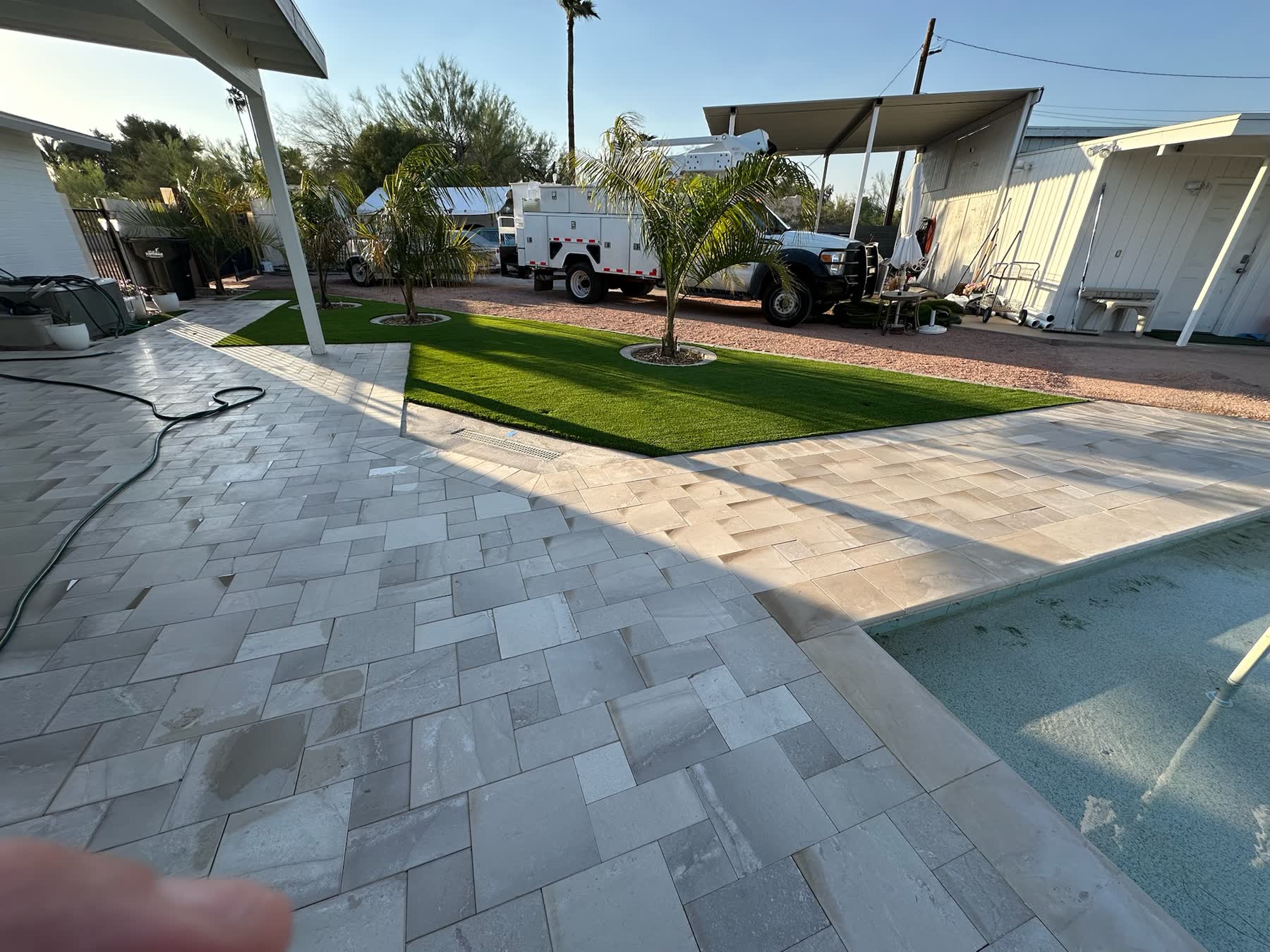
The grounds bill nobody itemizes
Hospitality grass fails in a particular way: it gets loved to death. A residential lawn sees one family; a site pad or event lawn sees new boots, tires, chairs, and pets every few days, all year. Operators answer with more water, more seed, more crew hours, and the grounds budget quietly becomes one of the property’s stubbornest line items, and still the high-traffic zones read brown in the listing photos that sell the next booking.
Artificial grass flips the structure of that cost. The spend moves to day one, and the recurring column (irrigation, mowing contracts, re-seeding after every busy weekend, mud control after every storm) goes to approximately zero for 15–25 years. For a property that measures itself in occupancy and reviews, the photogenic part is not cosmetic: green pads photograph green in February.
Where it earns its keep on a property
- RV site pads & patios: level, mud-free, tire-tolerant, and each pad an identical photo. Drainage-first builds rinse clean between guests.
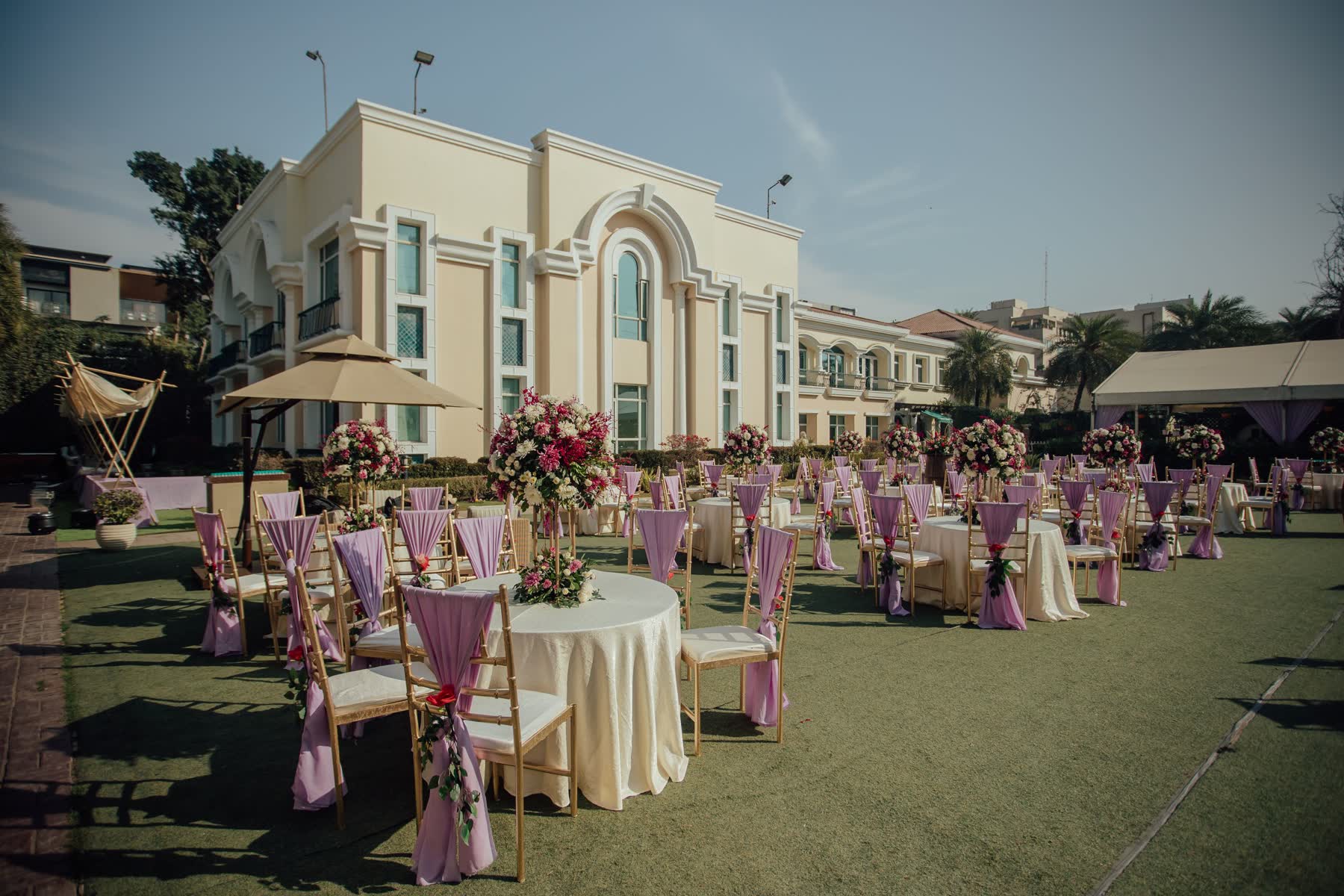
- Event lawns: ceremonies and receptions compact natural grass past recovery; turf takes chairs, dance floors, and tents weekly without a recovery window.
- Pool surrounds & courtyards: no clippings in the water, no mud track-in, soft underfoot where guests go barefoot.
- Pet areas: traveling dogs are the fastest-growing amenity ask; dedicated turf runs rinse clean and never wear to dirt.
- Playgrounds: cushioned, mud-free, and green in every season a family checks in.
The operator’s arithmetic
Run it per zone, not per property. A natural lawn drinks an estimated 30–50 gallons of water per square foot per year; multiply by the event lawn alone and the irrigation line usually funds a meaningful slice of the conversion by itself. Add the mowing contract (hospitality grounds typically run weekly service across a long season), the re-seed-and-rope-off cycle after peak weekends, and the crew hours spent on mud instead of guests. Then put the 16-year warranty against that recurring total: on most properties the busiest zones pay themselves back well inside it, and everything after is margin.
Phasing works the same way it does for schools: convert the highest-pain zone first (usually the event lawn or the most-booked row of pads), let a season of bookings make the argument, and expand on the precedent. Volume pricing applies per phase, and dye-lot planning keeps phase three matching phase one.
How supply works for a property
Hospitality orders are freight orders, and that’s our home turf: we quote turf and freight together to your ZIP, deliver to the property or stage at a nearby freight-partner hub for pickup, and cut rolls to your site plan so pads don’t inherit seams they don’t need. Texas operators will find us at the TACO (Texas Association of Campground Owners) table; every operator gets the same thing: published specs, free samples sized for a walk-the-property decision, and a real person on the phone who has done this for properties before. Start at the hospitality page and tell us what the grounds crew is fighting.