
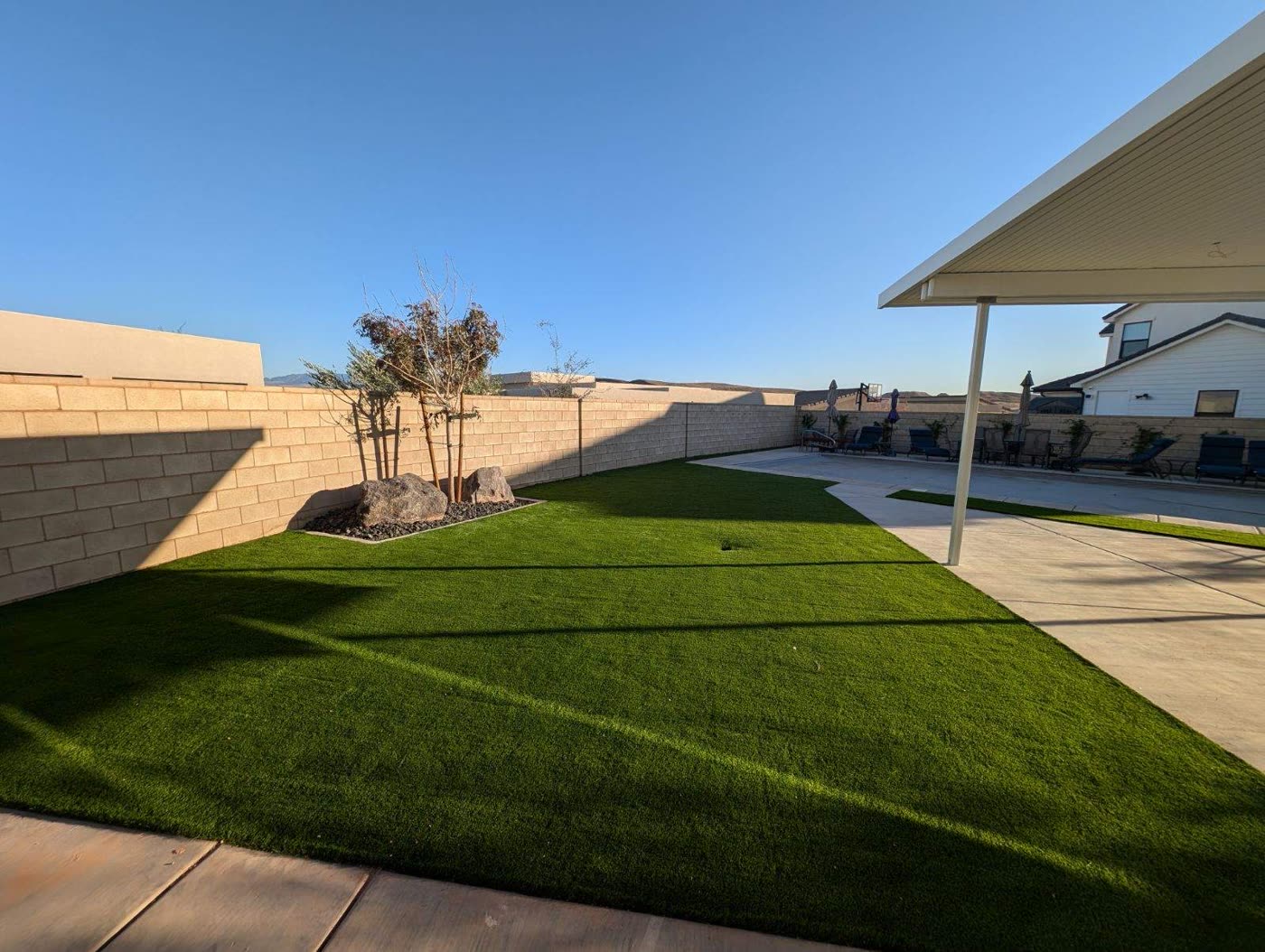
Why the desert led
From Phoenix to Vegas to El Paso, the Southwest normalized artificial lawns a decade before everywhere else, for arithmetic reasons: irrigating fescue in a 7–11-inch-rain climate is the most expensive way to own grass in America, and water authorities turned actively hostile to it, with Nevada famously paying residents per square foot to remove living turf. The desert didn’t adopt artificial grass as a compromise; it adopted it as the correction.
The desert spec, in order
- UV rating first: 300+ days of high-index sun is the fiber-killer; UV-stabilized fiber with top weathering scores is the difference between two decades and five summers.
- Heat management second: lighter multi-tone colorways run cooler, and the mist-and-shade playbook covers peak hours.
- Drainage last but real: monsoon bursts arrive sideways and all at once; published in/hr ratings handle what the sky saves up.
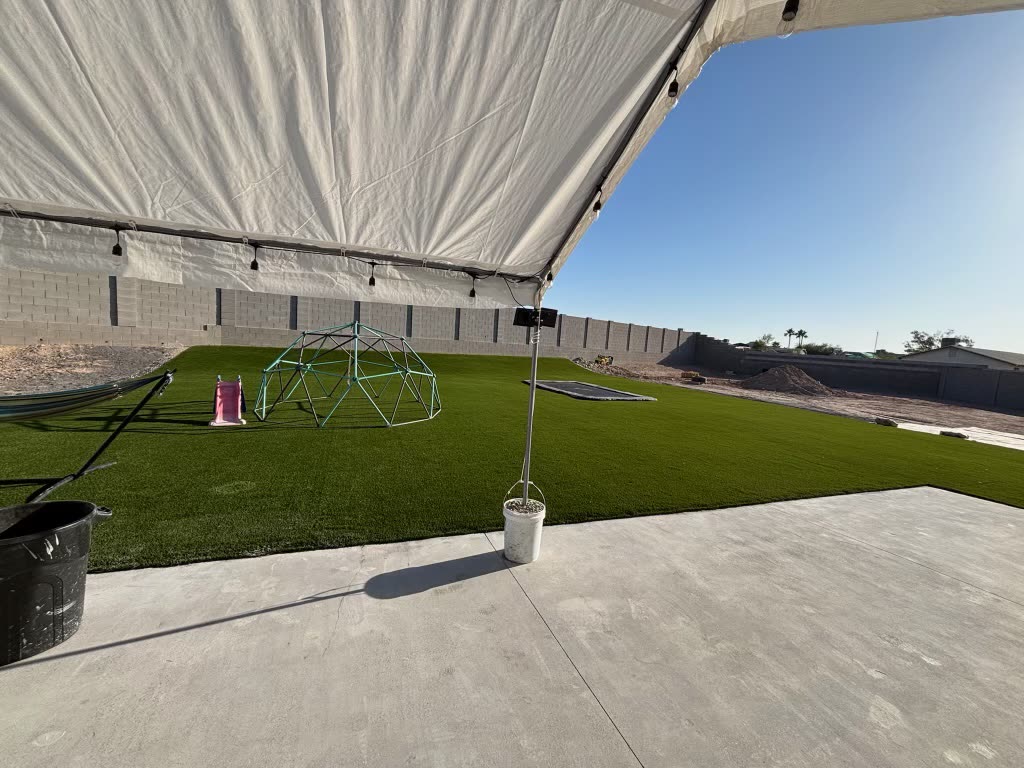
Joining the xeriscape, not fighting it
The best desert installs treat turf as xeriscape’s green square: a defined lawn zone framed by rock, agave, and shade structure. The result is HOA-presentable, kid-usable, and zero-irrigation like everything around it. Our Southwest hubs (Phoenix, Vegas, Albuquerque, El Paso) sit one short freight lane from the SoCal warehouses, which is why the region’s landed costs run friendliest in our network.