
The quick answer (70 × 14 × 12 feet)
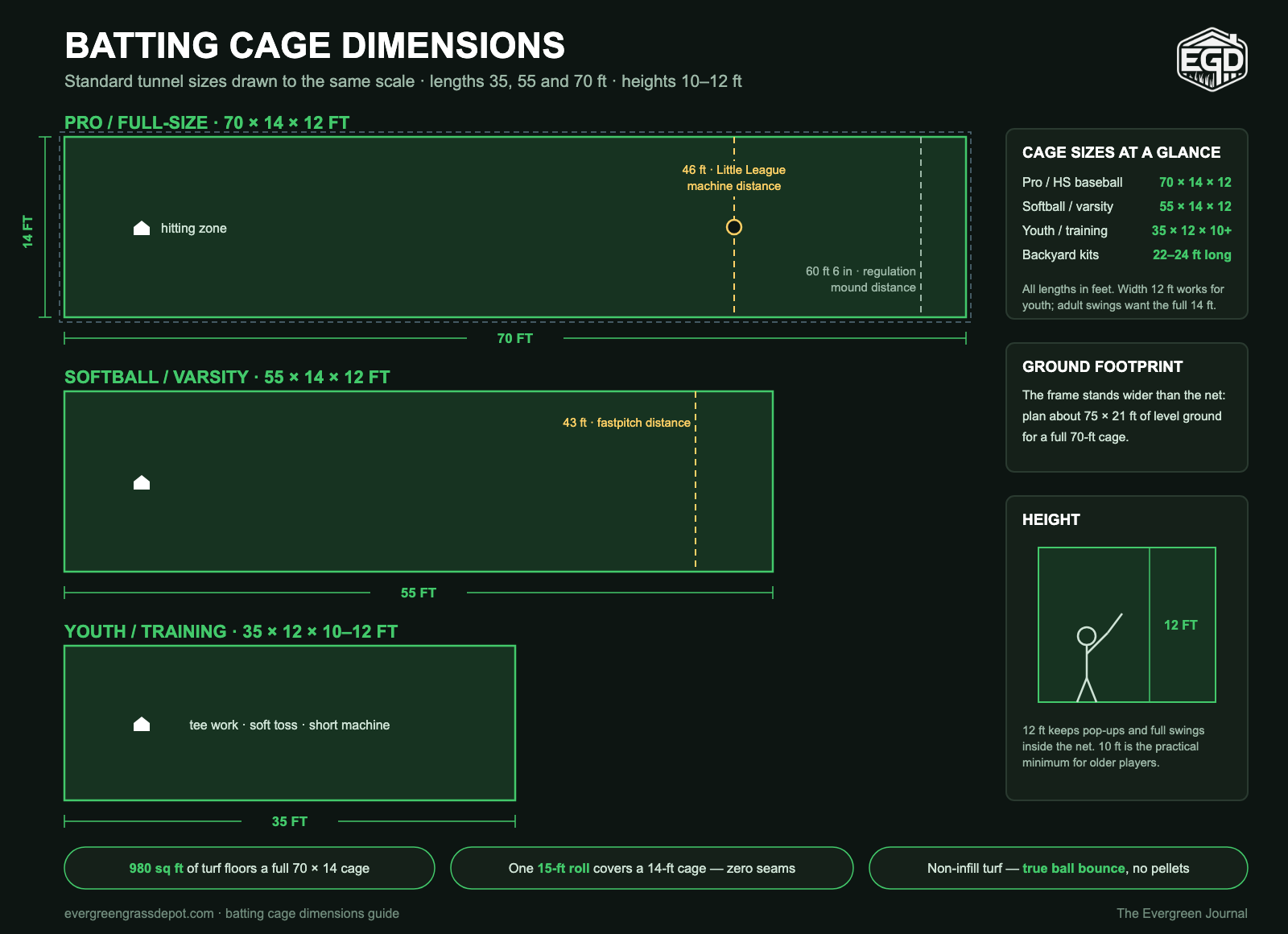
The standard full-size batting cage measures 70 feet long, 14 feet wide, and 12 feet high. There’s no rulebook behind that number the way there is for a field; it’s the size the equipment industry settled on because it fits everything the game asks of a tunnel: a hitter, a catcher’s depth behind the plate, and a pitching machine or live arm at a real distance, with the regulation 60-foot-6-inch mound distance fitting inside with room to spare.
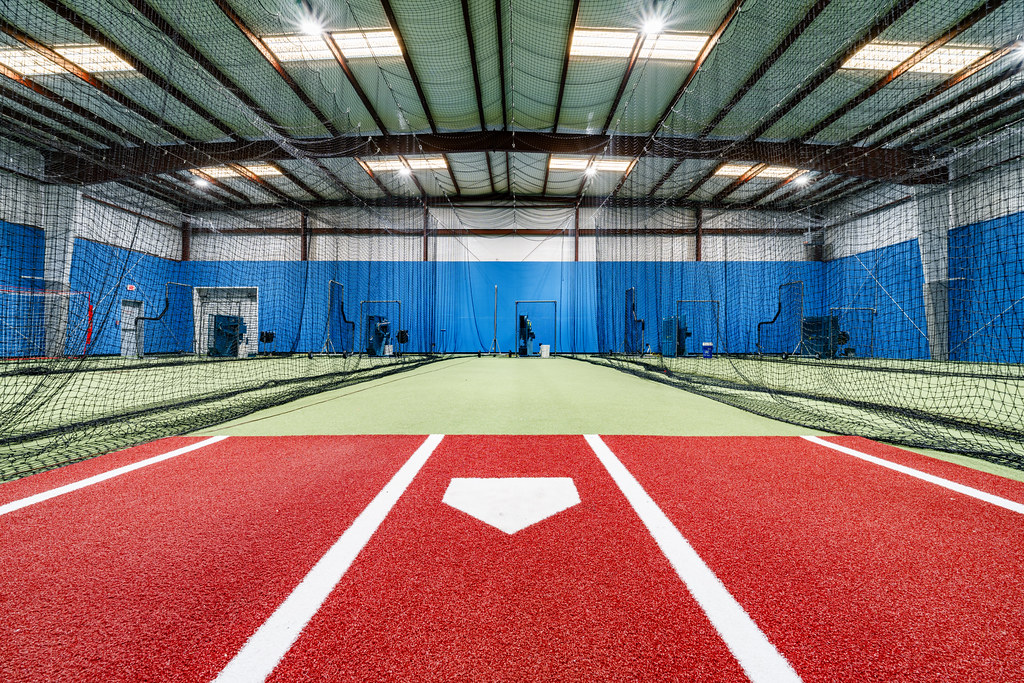 The other two numbers matter as much as the length. Width 14 feet gives an adult swing and follow-through honest clearance on both sides (youth tunnels get away with 12), and height 12 feet keeps pop-ups and a full extension inside the net; 10 feet is the practical floor for older players, and anything lower turns every fly ball into a do-over.
Tunnel sizes, in feet
The sizes you’ll see from every frame and net maker, and what each one is for:
- 70 × 14 × 12 — the full-size baseball tunnel for high school and up; the 60’6” mound distance fits with room behind the pitcher’s screen.
- 55 × 14 × 12 — the softball and varsity standard; fastpitch’s 43-foot pitching distance fits naturally.
- 35 × 12 × 10–12 — the youth and training tunnel: tee work, soft toss, and short machine sessions at Little League’s 46-foot distance scaled down.
- 22–24 feet — backyard kit territory, built for slower machines and younger hitters.
- Plan more ground than net: a 70-foot cage’s frame wants roughly a 75 × 21 foot footprint of level ground once poles and tensioning are in.
What goes under it
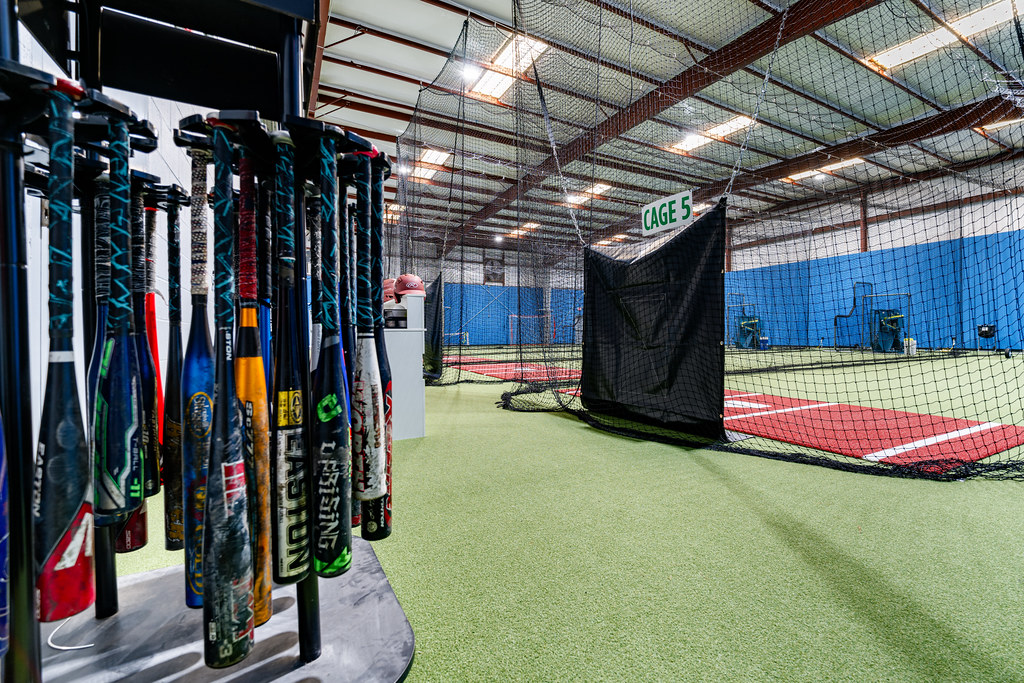 Walk into any serious training facility and the floor under every tunnel is the same thing: non-infill artificial turf, wall to wall. The reasons are mechanical. A cage floor eats thousands of identical impacts in the same spots — the batter’s boxes, the machine’s landing zone, the catcher’s crouch — and turf takes that concentrated wear without ever becoming the dirt patch a grass floor turns into by week two.
Non-infill matters specifically for cages: with no rubber pellets, grounders read true off the floor, there’s nothing to splash on contact, and the machine’s feed wheels stay clean. The dense, short construction also plays fast enough that fielding work off the cage floor translates to the real field.
Turf math: one roll, zero seams
A batting cage is one of the cleanest turf projects in sports, because of one coincidence of dimensions: turf ships on 15-foot-wide rolls and a cage floor is 14 feet wide. The entire floor of a full 70 × 14 cage — 980 square feet — cuts from a single 70-foot run with zero seams, which matters on a surface where every ground ball finds every imperfection. A 55-footer is one 55-foot cut; even a two-tunnel facility is just two parallel runs.
EverSport 105 is the cage pick: engineered as a non-infill system and FIFA Quality certified, so the same floor handles batting tunnels, fielding drills, and agility work. Sketch your cage’s footprint on the satellite quote tool and you’ll have the turf and freight number for the build in about ten minutes.