The quick answer (and the range behind it)
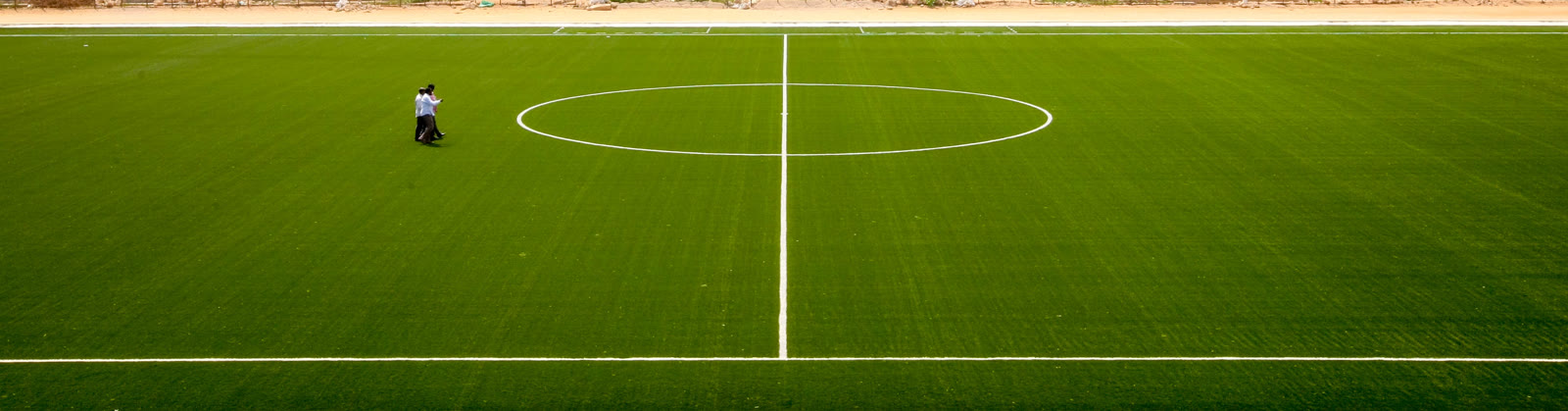
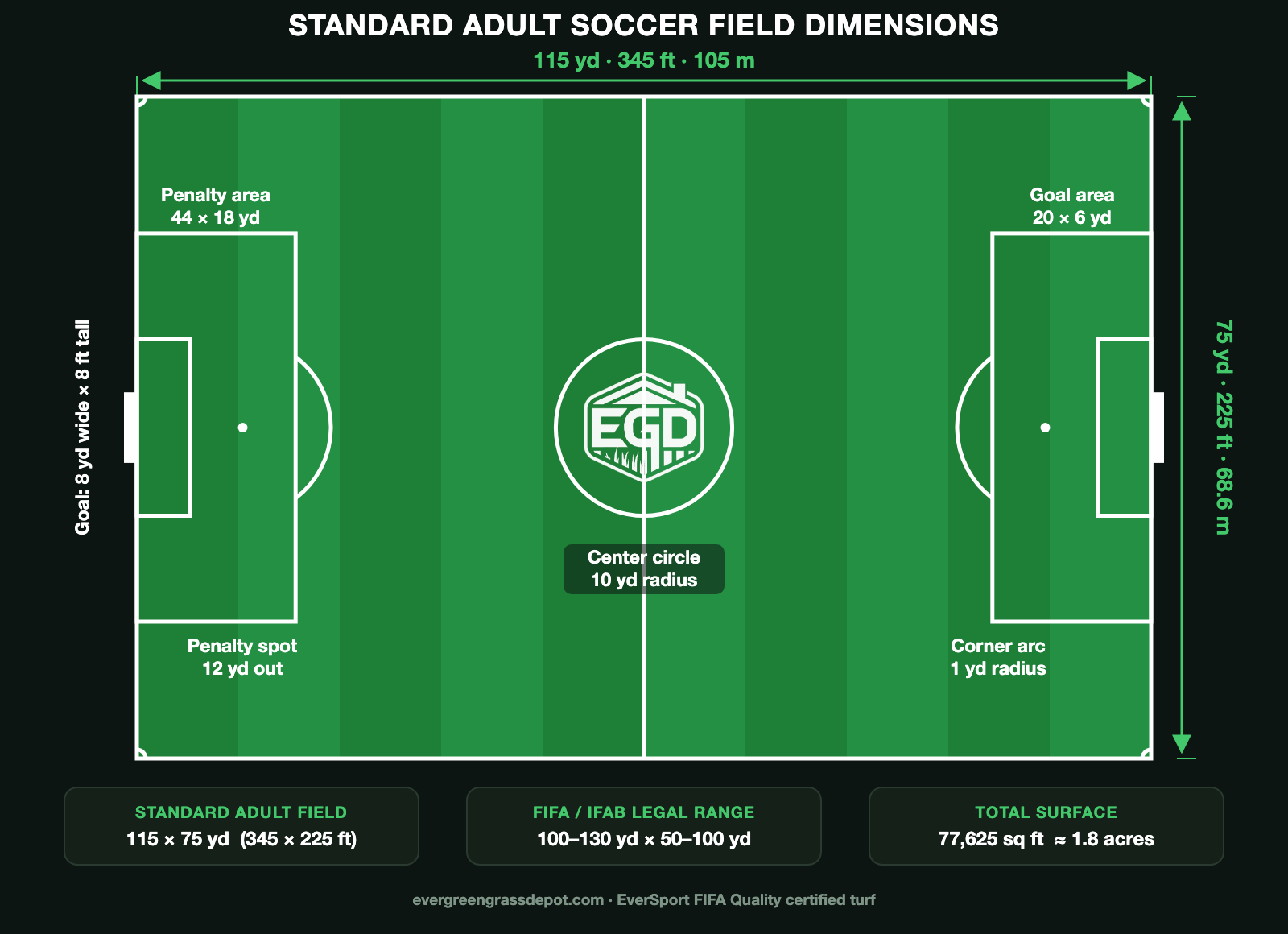
A standard adult soccer field measures about 115 × 75 yards (345 × 225 feet, or roughly 105 × 68.6 meters). That’s the size most professional and college fields are actually built to, and it’s the number to use if you’re planning one.
The official rules are looser than people expect. IFAB’s Laws of the Game (Law 1, the rulebook FIFA plays under) allow any length from 100 to 130 yards and any width from 50 to 100 yards, as long as the field is longer than it is wide. For international matches the window tightens to 110–120 yards long by 70–80 yards wide, and FIFA’s preferred build (the World Cup spec) is exactly 105 × 68 meters. So when two "official" answers disagree, they’re usually both right: one is quoting the legal range, the other the preferred build.
Field size by level of play
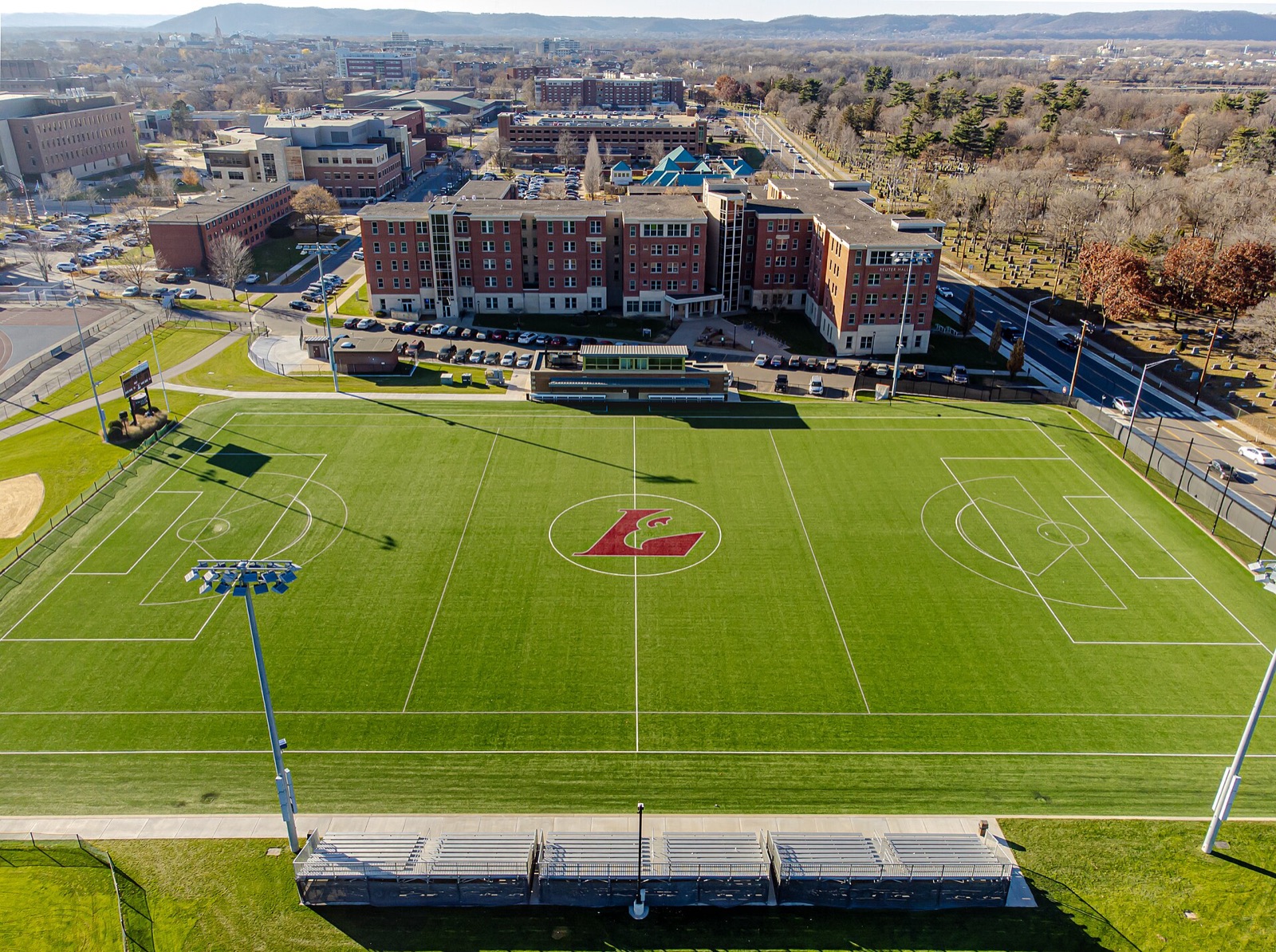 Field size tracks the level of play more than anything else. Each governing body publishes its own window, the pros build near the top of it, schools squeeze into shared football layouts, and rec leagues take whatever the land allows. Here’s the ladder, from World Cup spec down:
- FIFA World Cup / international: 105 × 68 m (115 × 74.4 yd); international window 110–120 × 70–80 yd.
- MLS: 110–120 × 70–75 yd required; most clubs build 115 × 75 yd.
- College (NCAA): 115–120 × 70–75 yd for new fields.
- High school (NFHS): 100–120 × 55–80 yd, so school fields vary the most; many share football layouts at 110 × 65 yd.
- Adult rec leagues: anything inside the IFAB range is legal; 110 × 70 yd is a common footprint where land is tight.
Inside the lines: boxes, circle, and goal
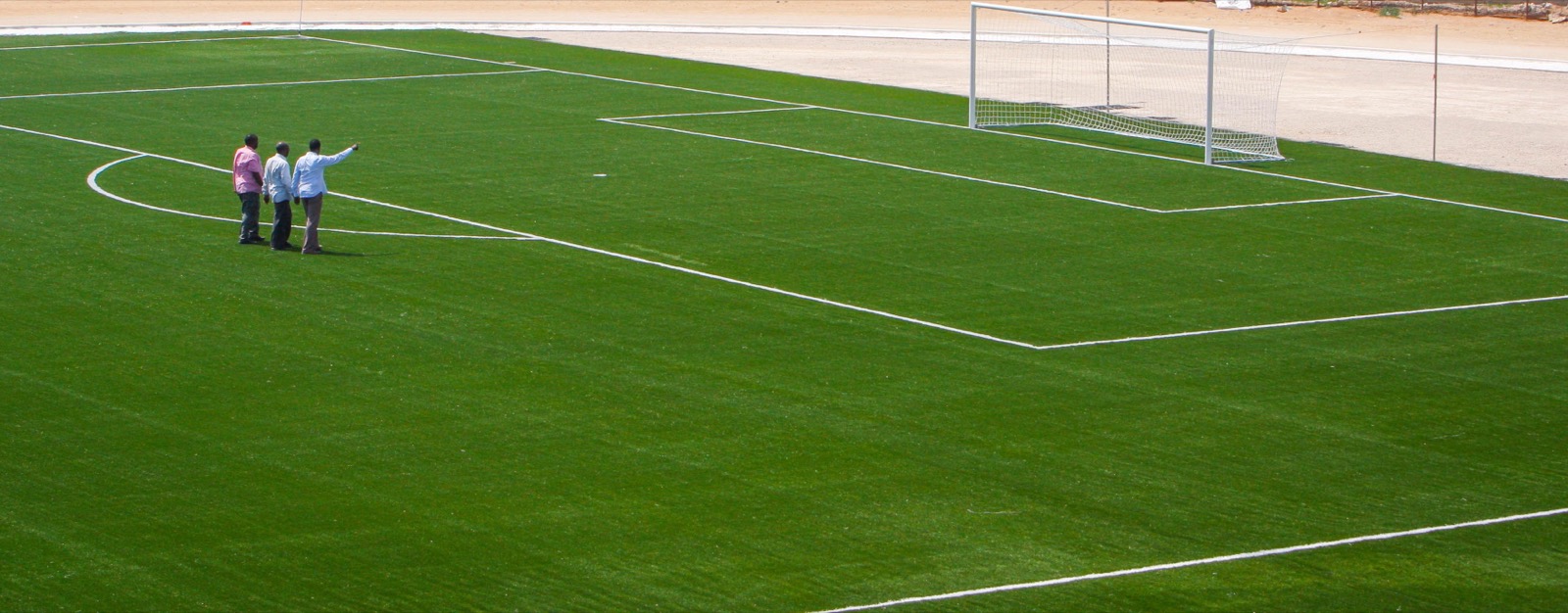 These don’t scale with the field. Whatever size the pitch is, the markings inside it are fixed, which is why a high-school keeper and a World Cup keeper guard the exact same goal. Every box is measured from the goal line out:
- Penalty area: 44 yd wide, extending 18 yd from the goal line (the “18-yard box”).
- Goal area: 20 yd wide, extending 6 yd out (the “6-yard box”).
- Penalty spot: 12 yd from the goal line, with a 10-yd arc outside the box.
- Center circle: 10 yd radius; corner arcs: 1 yd radius.
- Goal: 8 yd (24 ft) wide × 8 ft tall, every level from high school to the World Cup.
Quick answers in feet, yards, and meters
The same few questions arrive phrased a dozen ways, so here they are, one line each:
- How long is a soccer field in yards? 100–130 yards is legal; 115 yards is the standard build.
- Soccer field size in feet: 345 × 225 ft for the standard 115 × 75 yd field.
- Soccer field size in meters: 105 × 68.6 m standard; FIFA’s preferred build is exactly 105 × 68 m.
- College soccer field dimensions in feet: 345–360 ft long by 210–225 ft wide (115–120 × 70–75 yd under NCAA rules).
- 18-yard box dimensions in feet: 132 ft wide, extending 54 ft from the goal line.
- How wide is a soccer field? 75 yards (225 ft) standard; 50–100 yards is legal.
How much turf does a full field take?
The 115 × 75 yd playing surface is 77,625 square feet, just under 1.8 acres, and a real project never stops at the touchline: add the runoff zones, team areas, and perimeter aprons and most full-size builds land between 85,000 and 95,000 square feet of surface. In roll math, turf ships on 15-foot-wide rolls, so a 225-foot-wide field is exactly fifteen 345-foot runs laid side by side; it’s one of the few projects where the roll math comes out clean.
If the field you’re measuring is headed for synthetic turf, that’s our day job. EverSport 105 is FIFA Quality certified and engineered as a non-infill system (firm footing and true ball response with no rubber crumb to top up), and we quote field-scale projects with freight to your ZIP as one landed number. Measure your site on the satellite quote tool and you’ll have the real figure for your field, not the textbook one, in about ten minutes.