
DIY Guides
The lawn you see rides on the base you don’t.
Every wavy, puddled, or heaved turf install failed underground first. Here’s the layer that decides everything.
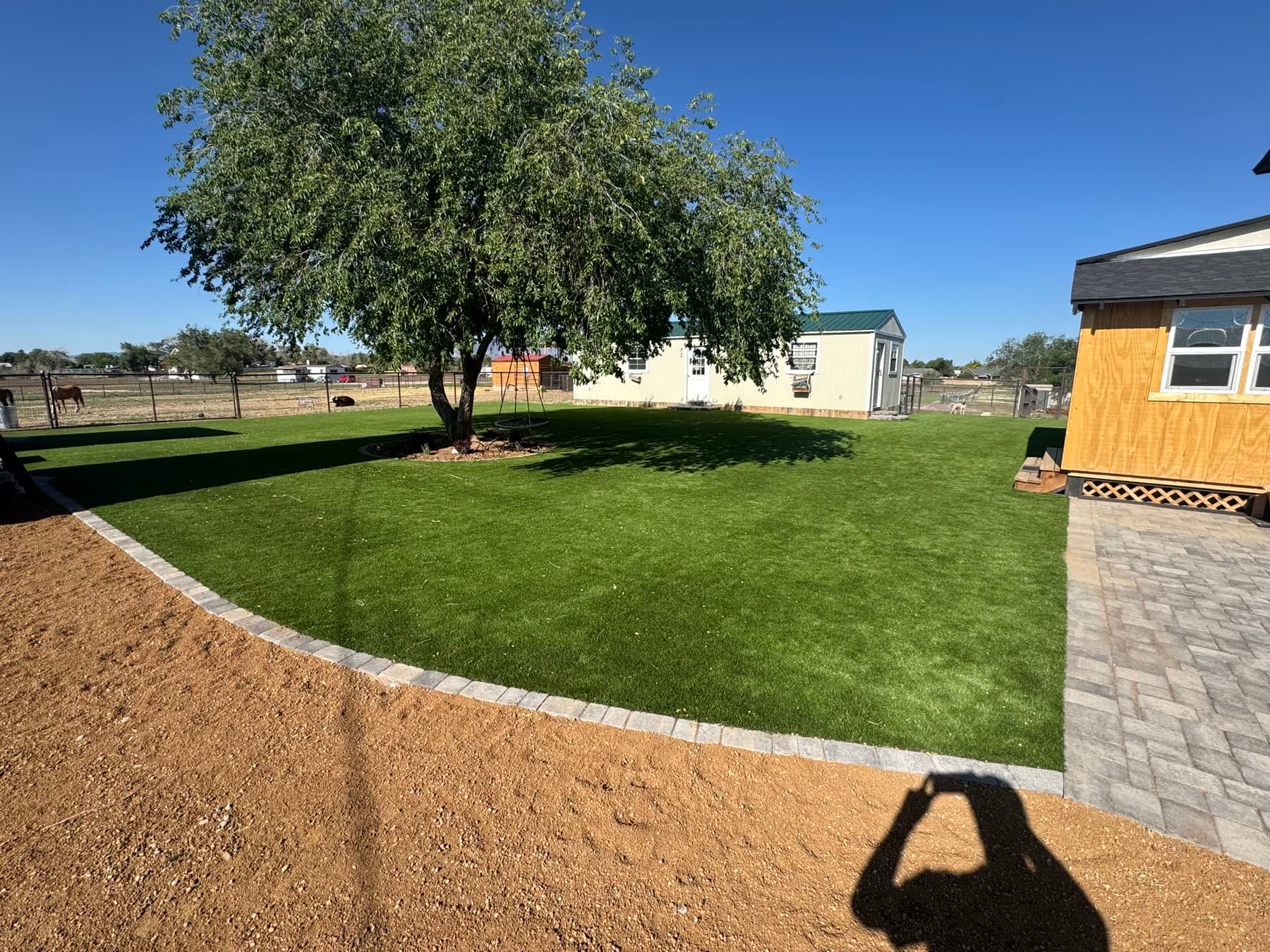 The base decides the next 20 years
Why base is the whole game.
Turf is a surface; the base is the structure. A properly excavated, compacted foundation keeps the lawn flat for decades, drains storms instantly, and shrugs off freeze-thaw cycles. A skimped base telegraphs every failure upward: ripples in year one, puddles in year two, a wavy mess by year five, and the only fix is a full tear-out.
The spec, layer by layer.
Excavate 3–5 inches (deeper in freeze-prone climates and over expansive clay). Lay a geotextile weed barrier; it also separates soil from base, preventing slow contamination. Then 3–4+ inches of 1/4-inch-minus road base (crushed rock with fines that lock when compacted), wetted and plate-compacted in lifts to roughly 90%. The footprint test: a boot should barely mark it.
Grade a gentle slope away from structures (roughly 1–2%) so subsurface water has somewhere to go. At edges meeting concrete or pavers, set base height so the finished turf pile sits flush, not proud.
- Cold climates: compact below frost behavior; heave prevention is a depth-and-compaction problem.
- Expansive clay (Texas gumbo, Yazoo): excavate deeper, separate with fabric, compact more; the base buffers the clay’s movement.
- Pet areas: consider a thin cap of finer material for perfectly smooth grading under short-pile turf.
- Never build on unexcavated grass or soil, the single most common fatal shortcut.
Keep Reading
Next in the library.
Plan it tonight: free tools, instant answers.
Measure your yard on satellite imagery, design your space in 3D with any of our turf lines, or just talk to a real person.