The quick answer (most greens land between 200 and 500 sq ft)
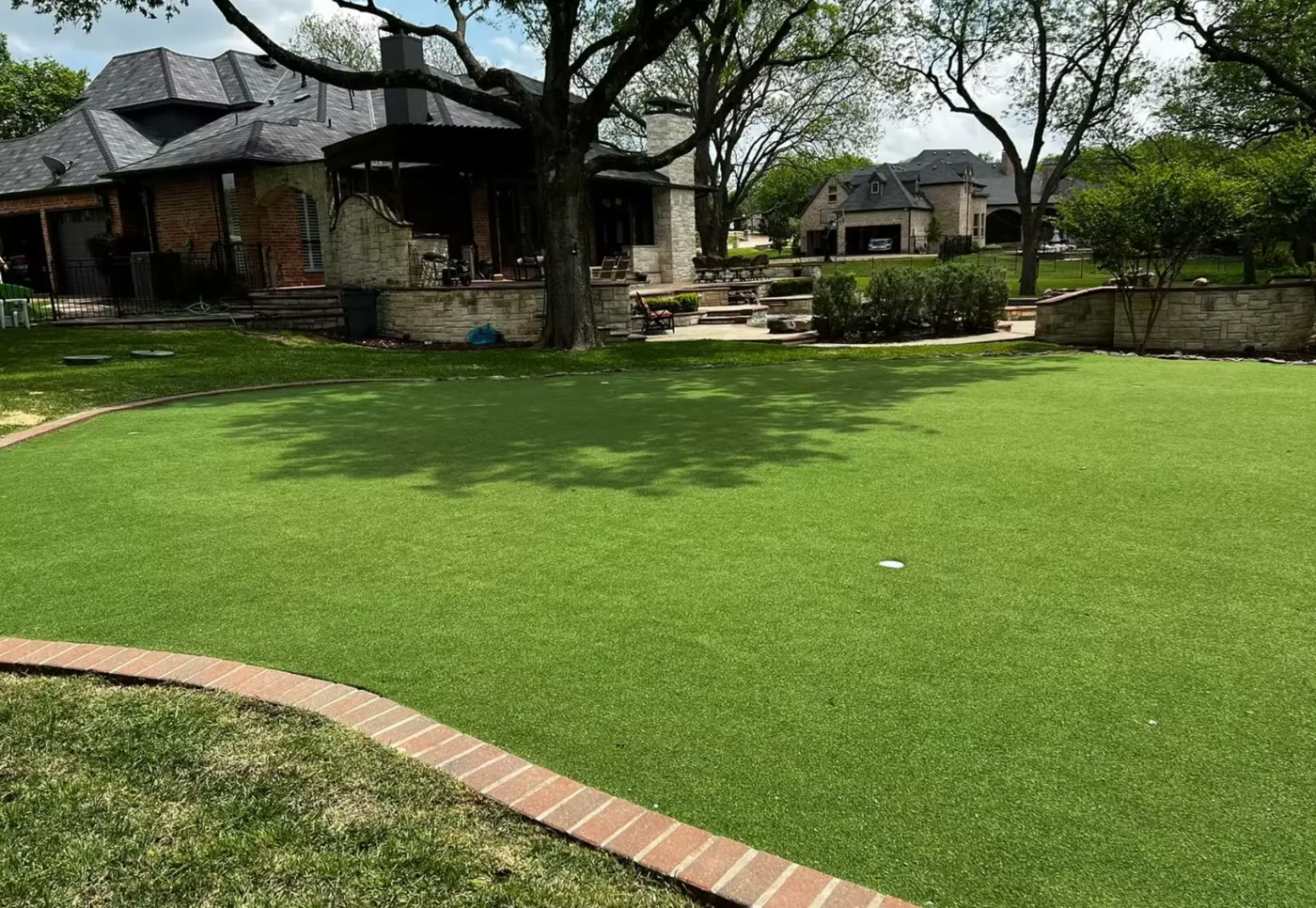
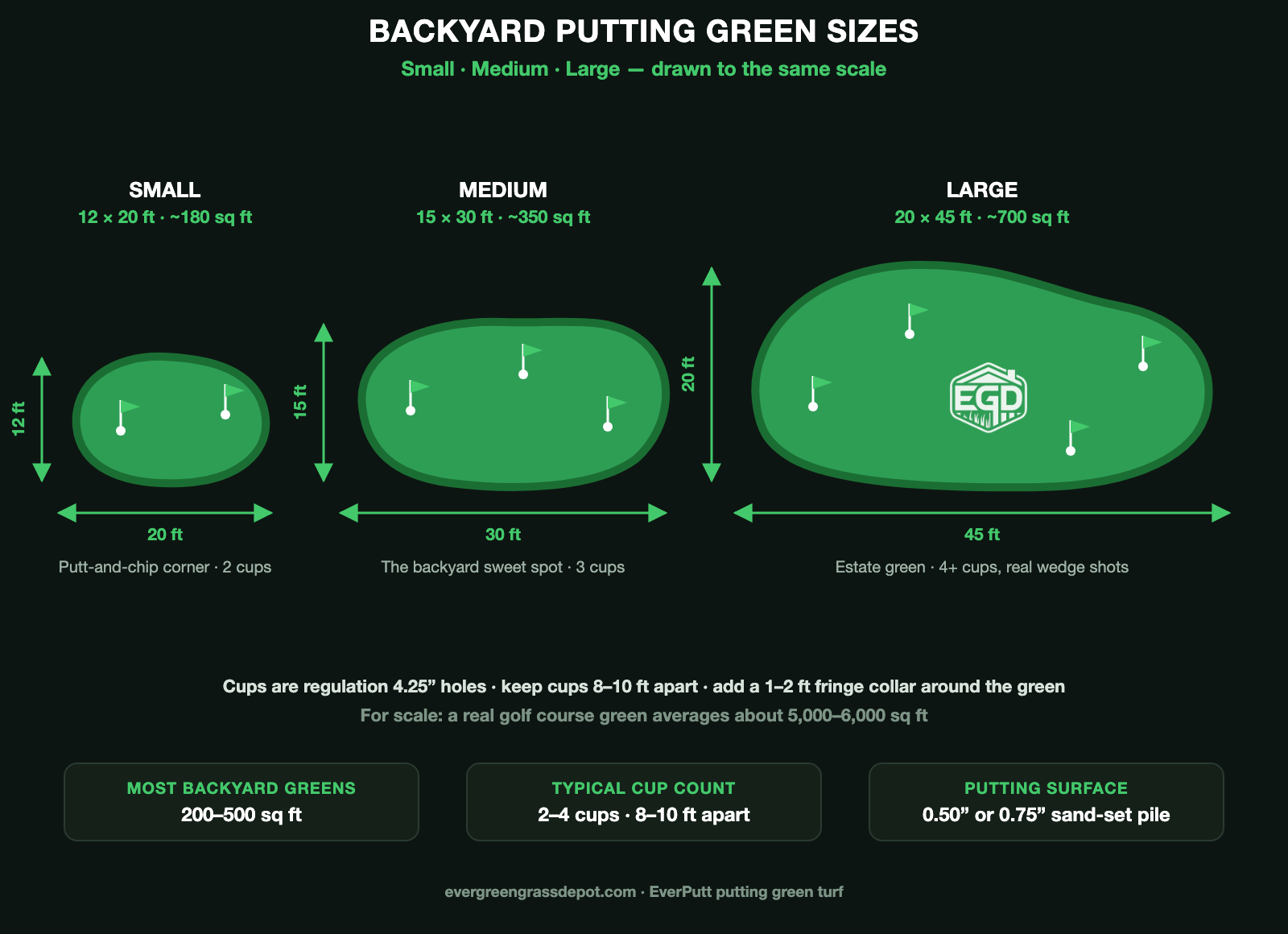
A small backyard putting green runs about 12 × 20 feet (roughly 180 square feet), a medium green about 15 × 30 feet (~350 sq ft), and a large one 20 × 45 feet (~700 sq ft). Most of the greens people actually build land between 200 and 500 square feet: big enough for real putts with some break, small enough to fit beside a patio without eating the whole yard.
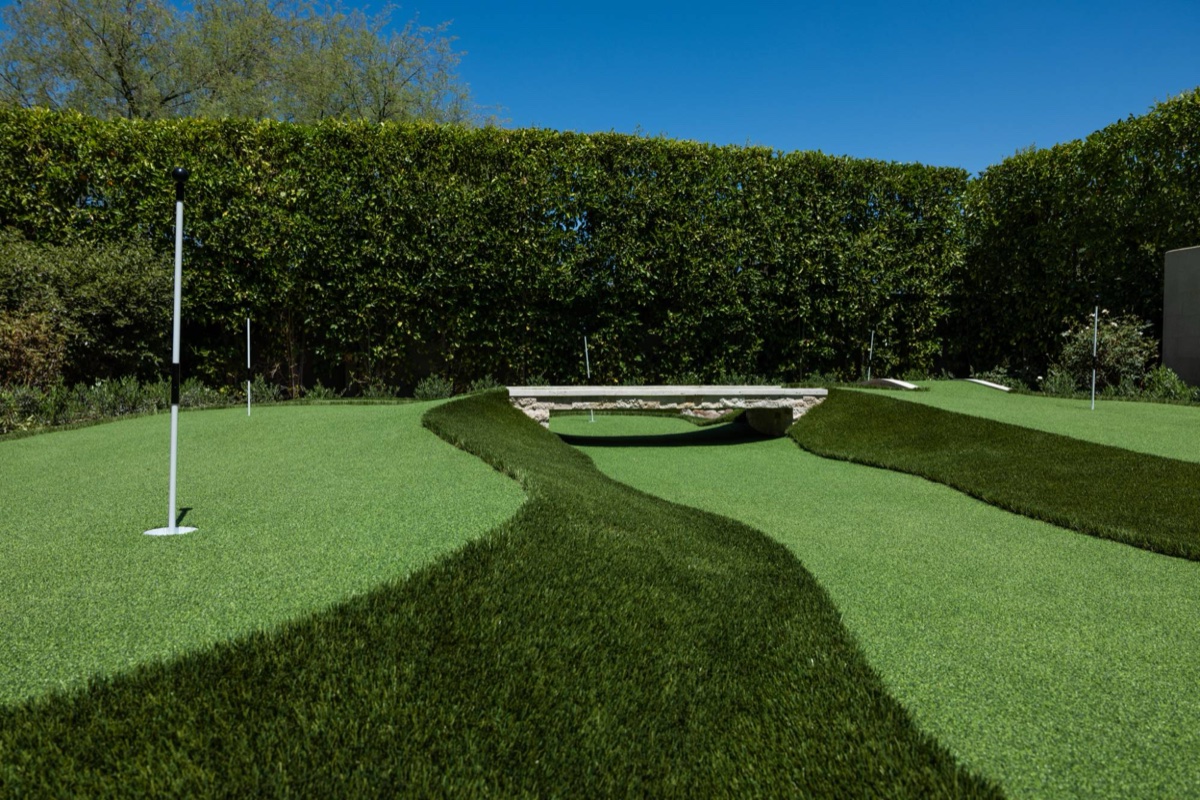
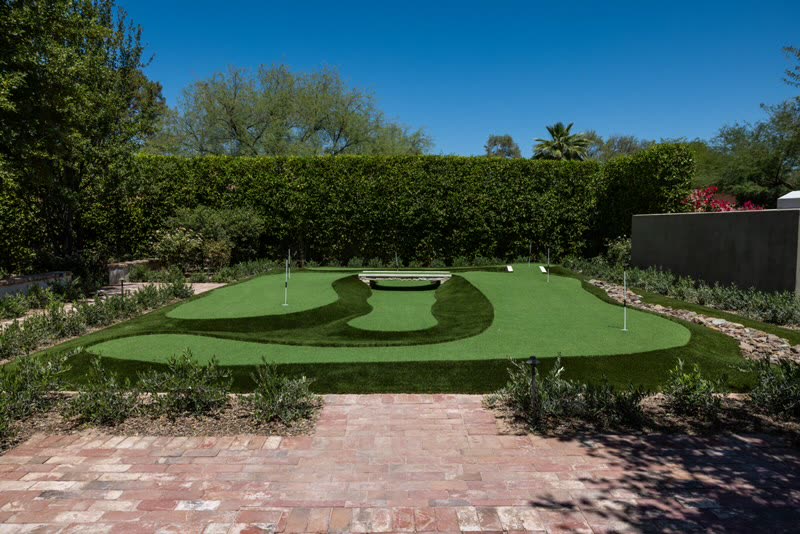 For scale, a green on a real golf course averages about 5,000 to 6,000 square feet. You don’t need anywhere near that, because a backyard green isn’t receiving 7-irons from 160 yards; it’s receiving chips, pitches, and putts, and 300 square feet handles all three. A green like this one, tucked between a bridge and a planting bed, is right in the sweet spot.
Pick your size by what you want to practice
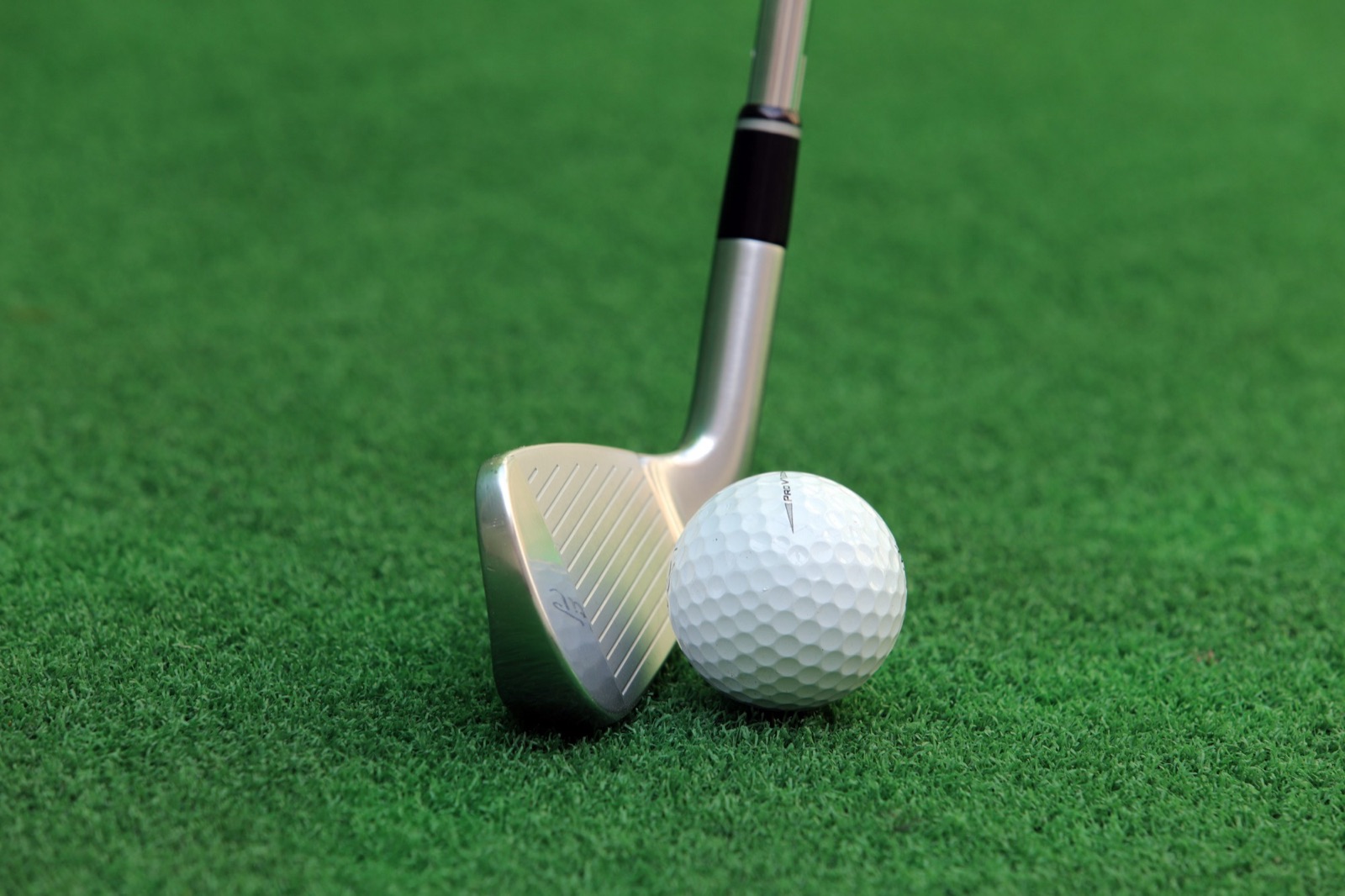 Size the green around the shots you actually want to hit, not the yard’s leftover corner. Putting alone needs surprisingly little room; the moment you want chips and pitches to land, check, and release like they do at the course, the footprint grows. Here’s the honest ladder:
- Putting only: 100–200 sq ft. A 10 × 15 or 12 × 20 footprint gives you 15-foot putts and two cups.
- Chip and putt (the sweet spot): 200–400 sq ft. Room for three cups, real break, and chips from off the collar.
- Full short game: 400–800 sq ft. Pitches from 15–20 yards hold properly on a green this size.
- Estate green: 800+ sq ft. Four or more cups, wedge shots, and separate tiers; this is a par-3 hole without the walk.
- Indoor: a 10 × 12 ft garage or office strip is plenty for stroke work; the same putting turf installs over concrete.
Cups, fringe, and the numbers inside the green
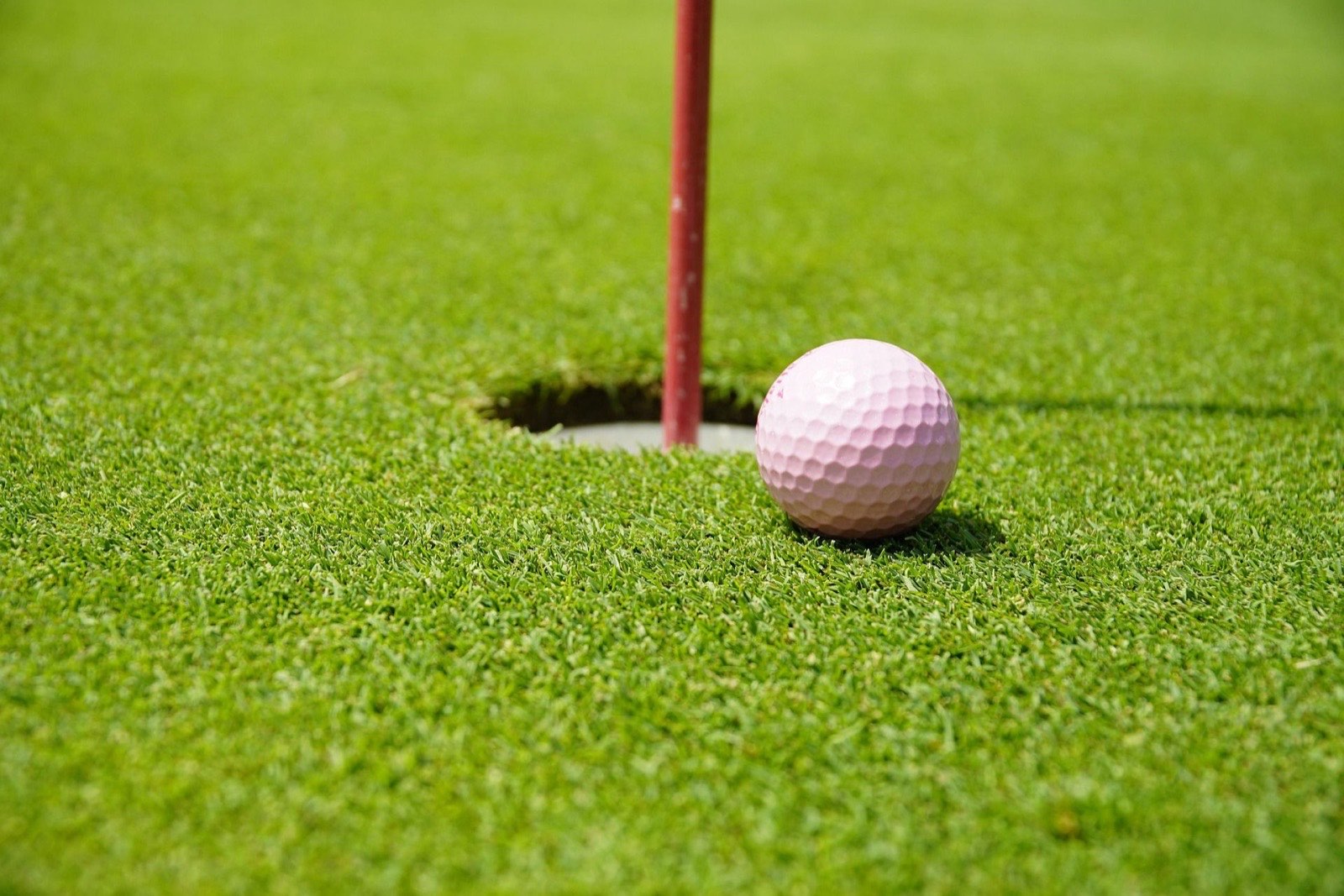 Whatever the footprint, the details inside it follow the same rules. The cup is the one true constant in golf: every green you’ll ever putt on, from your backyard to Augusta, drains into the same 4.25-inch hole.
- Cups are the regulation 4.25-inch hole, the same diameter the pros putt at.
- Cup count: two on a small green, three on a medium, four or more on a large; keep them roughly 8–10 feet apart so each putt feels different.
- Fringe collar: a 1–2 ft band of taller turf around the green frames it and gives you honest chipping lies.
- Break is built into the base, not the turf: an inch or two of fall across the green makes putts move.
- Keep cups 3+ feet off the edge so a confident putt isn’t a lost ball.
Turf math: what a green takes
Putting green turf is its own product, not short lawn turf. Our EverPutt 65 is a tight 0.50-inch pile that’s topped with sand to set the speed, the easy-rolling choice for first greens and indoor strips. EverPutt 81 is the premium build: a dense 0.75-inch pile that takes more infill, so you can tune it from relaxed to tournament pace and it reads like a maintained bent-grass green.
Greens are cut from full-width rolls, so most backyard sizes need only one or two seams, and the fringe is cut from a taller companion turf in the same order. Sketch your shape on the satellite quote tool, or design the green in 3D, and you’ll have the turf, sand, and cup count for your exact footprint in a few minutes.