
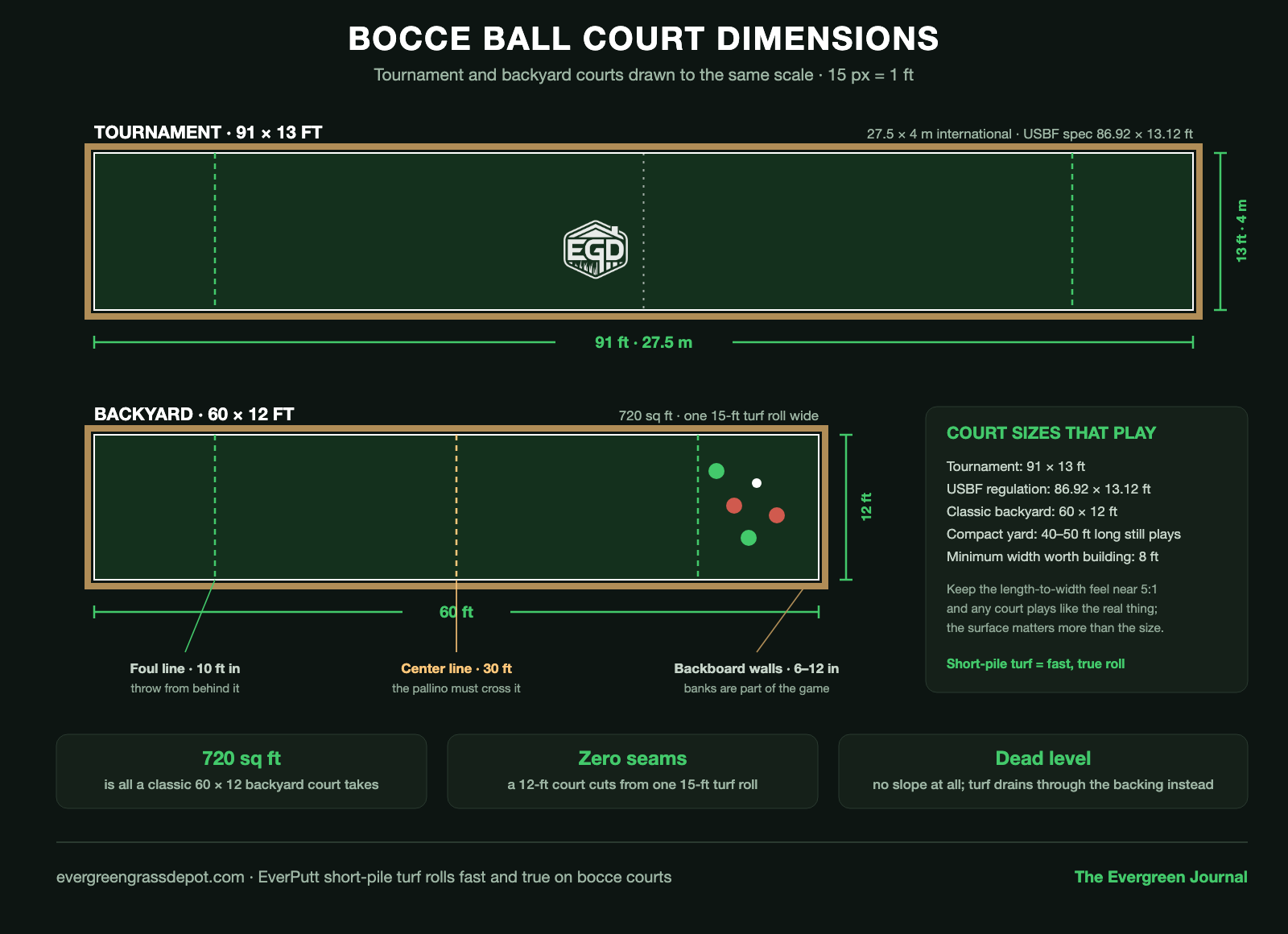
The quick answer (91 × 13 regulation, 60 × 12 backyard)
A regulation bocce ball court measures 91 × 13 feet, the footprint behind the international 27.5 × 4 meter spec; the United States Bocce Federation’s own rulebook calls for 86.92 × 13.12 feet (26.5 × 4 m), which is why two “official” answers disagree by four feet. Unless you’re hosting sanctioned play, the difference doesn’t matter.
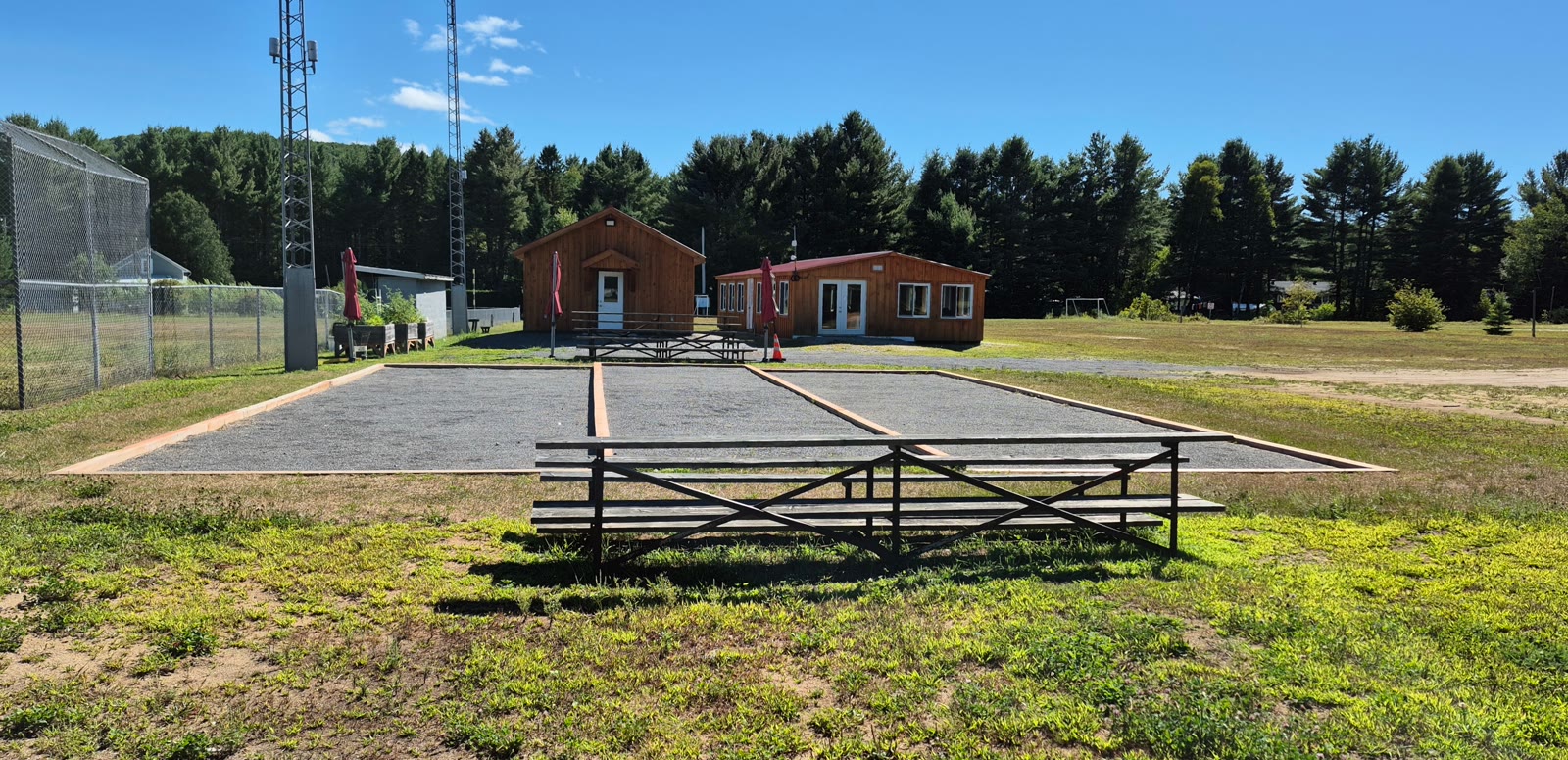 What matters for a home build: most backyard bocce courts are 60 × 12 feet, and a yard that can only spare 40 or 50 feet of length still plays a real game. Keep the proportions near 5:1 length to width, keep the width at 8 feet or more, and the court will feel right at any size, because bocce’s skill lives in the surface, not the footprint.
The lines inside the court
However long the court, the markings follow the same logic. On the classic 60-footer:
- Foul lines sit about 10 feet in from each backboard; you release the pallino and every throw from behind them. (Some leagues mark a separate hitting line a few feet further in for bank shots.)
- The center line crosses at half court: the pallino must pass it on the opening toss, and must settle past it without touching the far backboard.
- Backboards and sideboards are solid walls, usually 6 to 12 inches tall; banking off them is a legal and essential part of the game.
- The court is dead level. Unlike a lawn, a bocce court gets no drainage slope; an inch of fall is enough to bend every slow roll the same direction.
Fitting one in a backyard
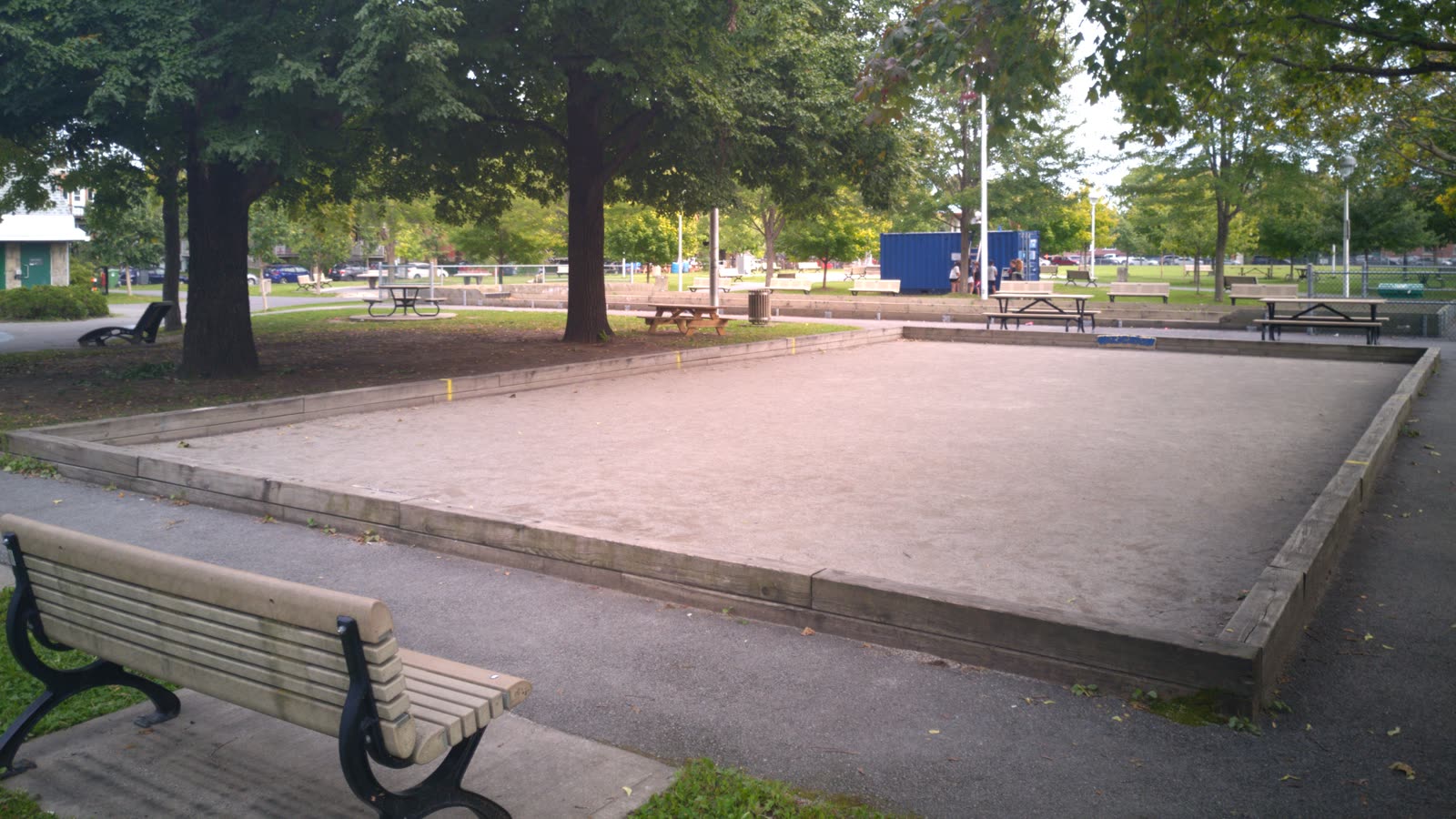 A bocce court is the rare sport build that wants the dead space in a yard: the long, narrow strip along a fence or property line that’s useless for everything else is exactly 60 × 12. The classic surfaces are oyster shell blend and decomposed granite, and they play beautifully, but they also dust, rut, puddle after rain, and need seasonal raking and rolling to stay flat and fast.
That maintenance list is why so many new courts are surfaced in short-pile artificial turf instead: it holds dead flat forever, drains straight through instead of puddling, and rolls fast and true from the first throw to the last without a rake ever touching it.
Turf math: the zero-seam court
Bocce is the friendliest turf project there is. A 60 × 12 court is 720 square feet, turf ships on 15-foot-wide rolls, and 12 is less than 15, so the whole playing surface cuts from one 60-foot run with zero seams, which matters on a surface where a slow ball will find any imperfection. Even a full 91 × 13 tournament court is a single 91-foot cut.
EverPutt 65 is the pick: the same dense, sand-dressed short pile that makes putting greens roll true makes a bocce court play fast and honest. Sketch the strip on the satellite quote tool and you’ll have the turf, sand, and freight for your court in about ten minutes.