
DIY Guides
Seams you can’t find, edges that hold.
The two details that separate professional-looking installs from obvious ones.
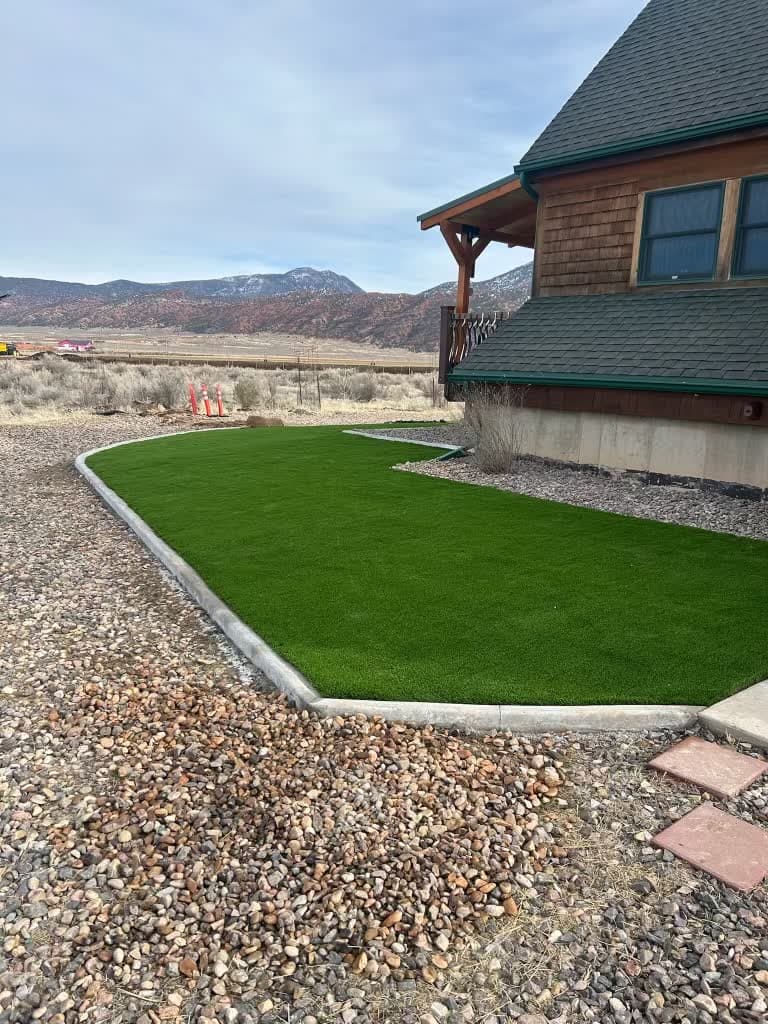 Edges you can run a finger down
Seaming: where installs get judged.
A good seam disappears; a bad one is the first thing every visitor sees. The rules: fibers on both pieces must run the same direction (a reversed piece reads as a color change, the classic giveaway), edges must butt cleanly without overlapping backing, and stitch rows should sit the same distance apart across the joint as they do within each piece.
Technique: dry-fit first. Fold both edges back, center the seam tape, apply glue in an even serpentine, then walk the pieces together from one end, never dropping both edges at once, keeping fibers out of the glue. Weight the seam while it cures.
Edging: the frame that keeps it tight.
Edges take the most abuse and cause the most callbacks. Perimeter spikes every 8–12 inches are the baseline; a hard border upgrades everything: bender board, steel edging, concrete mow curbs, or existing hardscape all give the turf something to die into cleanly and keep infill contained.
- Against concrete: trim so pile brushes the surface flush: no gap, no climb.
- Against planting beds: bender board keeps mulch and turf from trading places.
- On slopes: tighten spike spacing and consider buried anchor trenching at the top edge.
- Dog areas: hard borders everywhere; edges are where determined diggers start.
Keep Reading
Next in the library.
Plan it tonight: free tools, instant answers.
Measure your yard on satellite imagery, design your space in 3D with any of our turf lines, or just talk to a real person.